The Race Before the Race: How F1 Teams Travel the World
Sunday December 6 2026
Last updated March 2026
Ever wondered how Formula 1 teams move hundreds of tonnes of cars, equipment, and gear across the world in time for every Grand Prix?
Before the lights go out on race day, they have already taken part in a different kind of race that spans continents, cargo planes, and tight deadlines. Here’s how the teams pull it off and get every car, tool, and tyre to the track on time.
When most people think of a Grand Prix, they think of the race itself: the speed, the drama, the action on track. But what they don’t see is the massive effort it takes just to get everything to the circuit. It’s a race of its own, happening behind the scenes.
Each Formula 1 team brings around 50 tonnes of equipment to every race. That includes the cars, spare parts, tools, computers, tyres, fuel, and even items like kitchen gear, tables, and chairs. In total, more than 500 tonnes of freight are moved for each race, with a value of over $250 million.
It’s not just team gear that travels. Formula 1 is also responsible for transporting over 150 TV cameras, hundreds of kilometres of cabling, and all the infrastructure needed to broadcast the race live around the world.
From Factory to Pit Lane
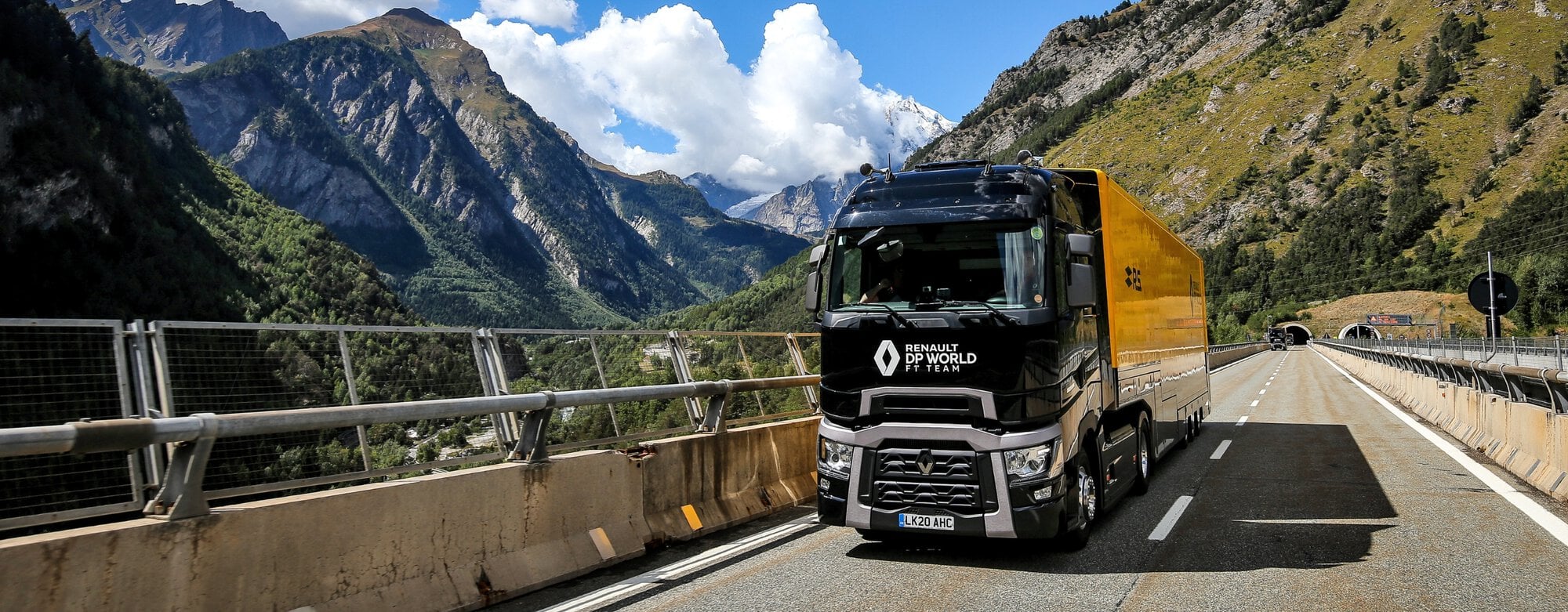
For European races, most of this gear travels by road in large trucks. But for long-haul events, teams rely on a combination of air and sea freight. Large, non-critical items such as office furniture and catering supplies are sent by sea several weeks in advance. The more important equipment, such as the cars and key components, is flown in closer to the race weekend. Formula 1 typically uses several Boeing 747 cargo planes to move everything.
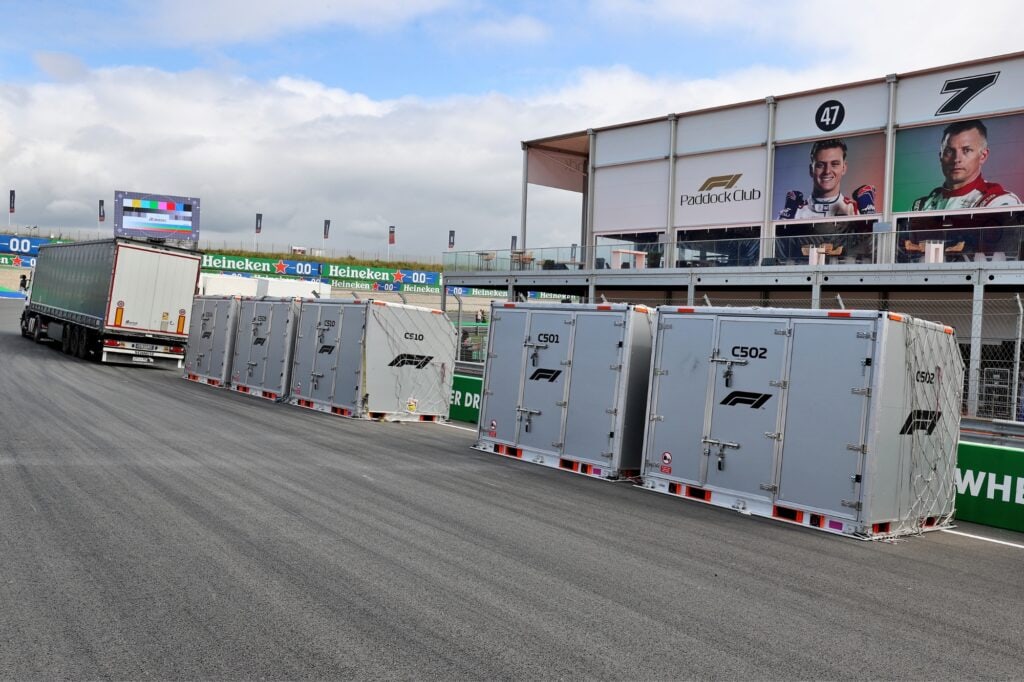
Formula 1 freight containers arrive on the grid at Zandvoort
To stay ahead of the schedule, each team keeps multiple sets of sea freight containers rotating around the world. These are packed with bulkier, less essential items and sent to future race locations well in advance. This ensures there is always equipment waiting when the team arrives. Essential gear is transported by air, packed onto aircraft pallets, and flown out closer to race weekend.
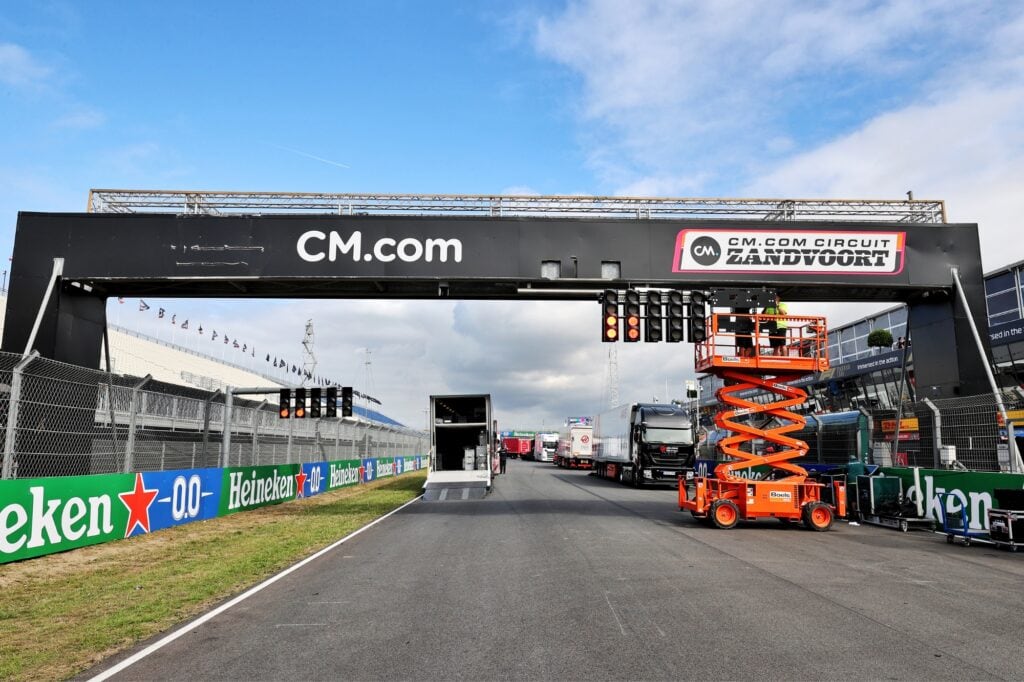
Freight arrives at circuit and setting up begins 4–5 days before race weekend
Once the freight reaches the host country, it is taken by truck to the circuit and delivered directly to each team’s garage. When the crew arrives, their first task is to unpack the containers and set up the garage.
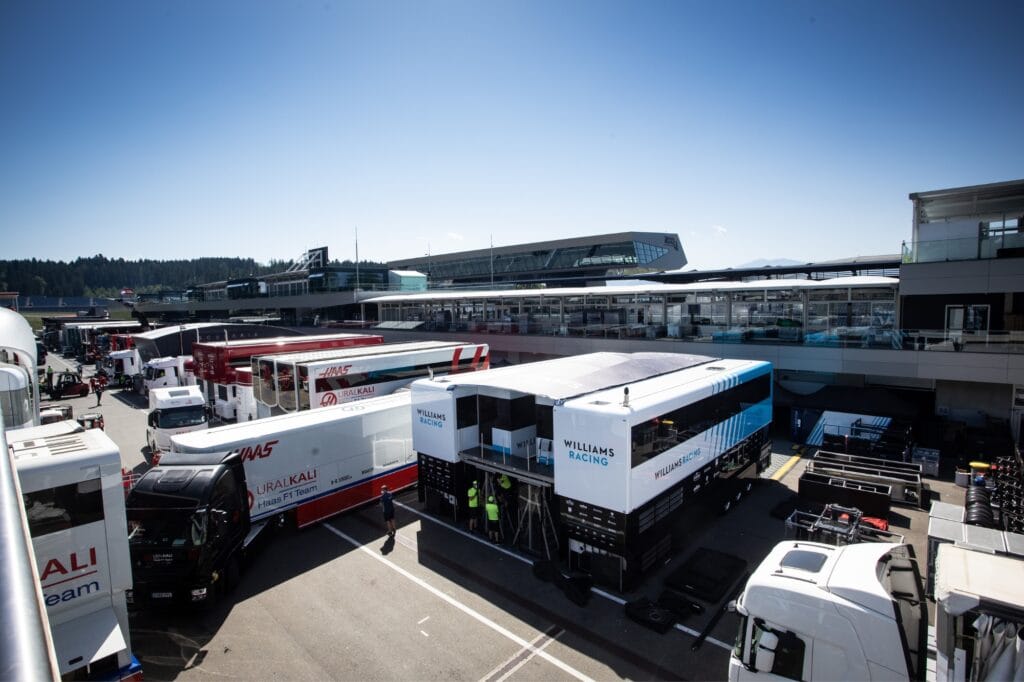
Trucks get into position as the paddock take shape
Interestingly, the teams all agree to wait until every competitor’s equipment has arrived before setting up. It is one of the few moments of coordination between fierce rivals, built in as a rule to keep things fair.
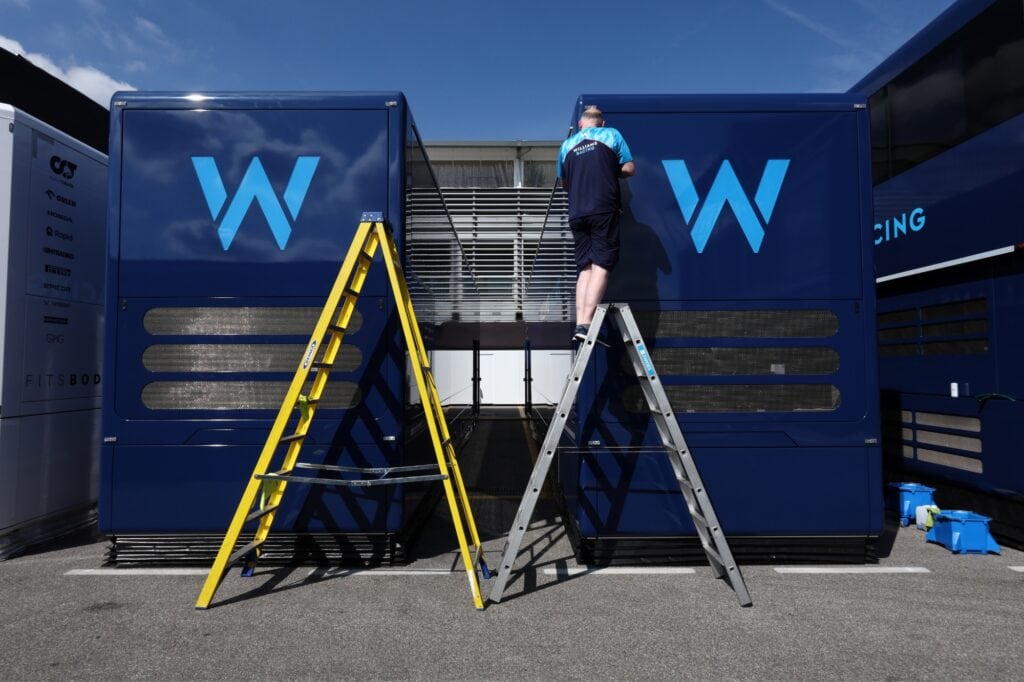
Setting up the Williams Racing motor homes
Moving Day, F1 Style
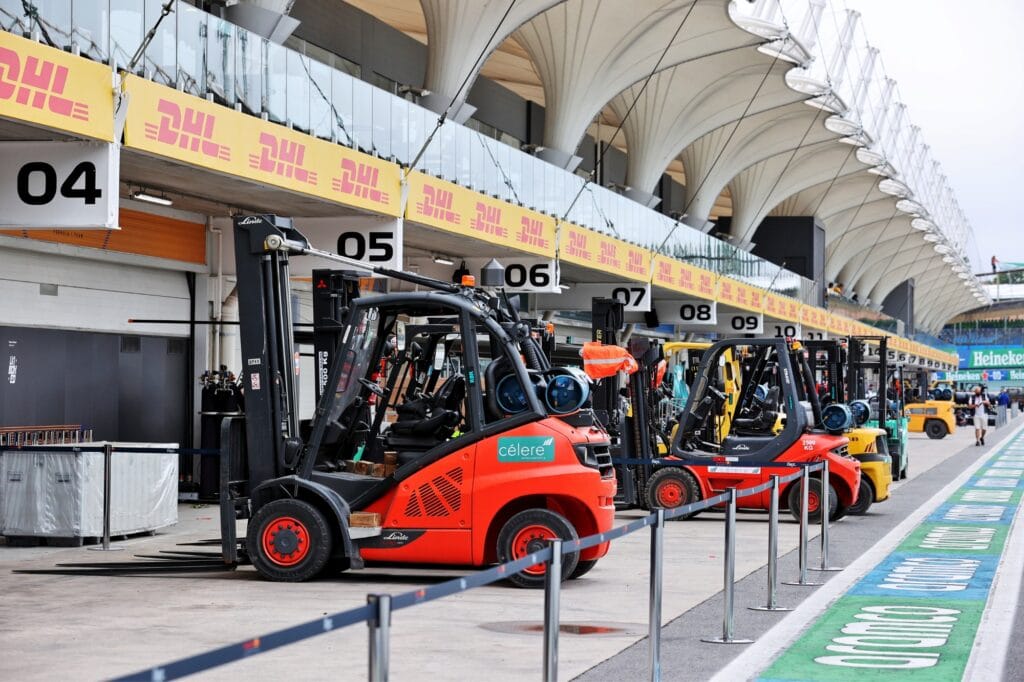
Even before the race finishes on Sunday, teams begin packing everything up again for the next event. As soon as the chequered flag falls, forklifts move into the pit lane and the teardown begins. It usually takes between six and eight hours to pack everything away, depending on how quickly they can access the paddock.
Ready for action, forklifts move into the pit lane
The timing is tight. For back-to-back race weekends, especially between continents, every hour counts. Teams often work through the night to dismantle, load, and dispatch the freight, with some staff flying directly to the next location the following morning.
In many ways, the logistics of getting to and from each Grand Prix is just as intense as the action on track. It is a carefully choreographed effort, and just like the racing, there is no room for error.
Timeline of the F1 Logistics Journey
A simplified overview of how a team’s equipment gets to a fly-away Grand Prix.
I keep going back to these travel companies because they’re reliable, easy to use, and usually have the best value. They’re where I start every time I plan a trip.
Tickets
Motorsport Tickets and Grand Prix Tickets are the two agencies I’ve trusted for years. They’ve always been reliable, easy to deal with, and quick to help if something comes up.
Hotels
ZenHotels is one of my go-to sites for hotel bookings. It pulls prices from loads of smaller sites you might not know about, so it’s great for finding deals. I also check Expedia and Booking.com when I want more options.
Excursions
Viator is packed with walking tours, attraction tickets, and local experiences. It’s especially handy if you’re heading to a new Grand Prix city. It’s a great place to find extras to add to your trip.
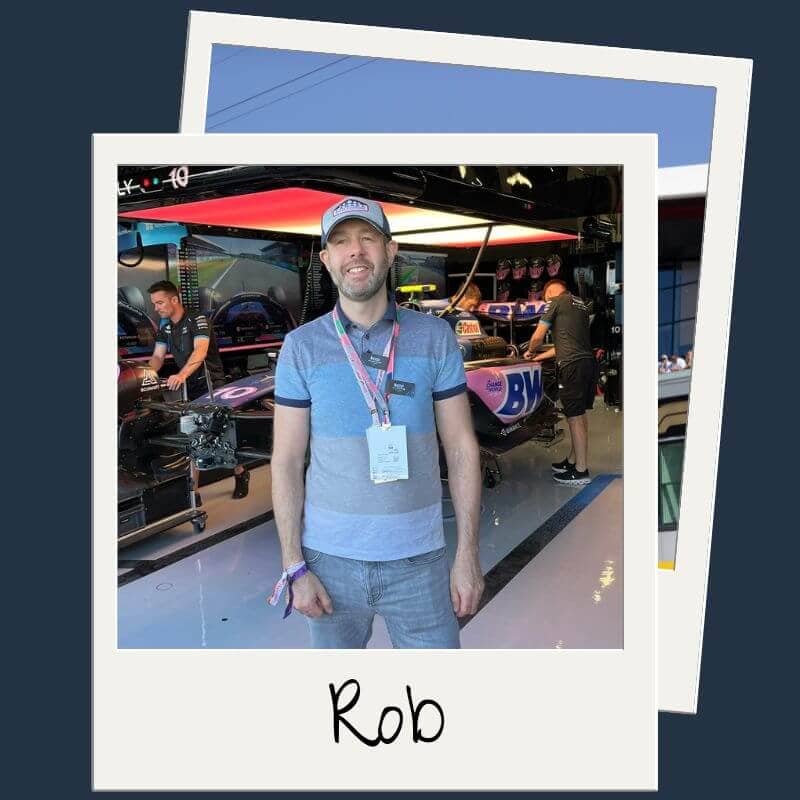
Rob is an experienced independent travel consultant and travel content creator.
His love for Formula One started in the 1990s, watching the greats like Ayrton Senna, Michael Schumacher, and Mika Hakkinen. He traveled to his first Grand Prix in 1999. It was the Spanish Grand Prix in Barcelona. Since then, Rob has traveled to over 2/3 of Grand Prix’ on the current Formula One calendar.
Fast forward to today, and Rob has turned his passion into a career, dedicating his time to helping others plan their dream Formula One trips.
His favourite Grand Prix destinations are Austria and Austin, and when he’s not attending a Formula One Grand Prix, you’ll find him closer to home, walking or cycling in the Peak District National Park.
Featured Articles
Find Your Next Grand Prix Adventure!
Excited about the next Formula One season? If you'd like to attend a Grand Prix, you're in for a treat. Discover where Formula 1 could take you.
5 Reasons Why the Singapore Grand Prix Should Be on Your F1 Bucket List
Few races capture the magic of Formula 1 quite like the Singapore Grand Prix. With its night-time setting, unbeatable city-center location, and thrilling street racing, here are five reasons why it’s an experience every F1 fan should have.
What’s it like to experience Formula 1 in the heart of motorsport’s most glamorous setting? We asked Marc Priestley, former McLaren race mechanic and pit lane insider, to share his take on the Monaco Grand Prix.
Choosing the right vantage point can change everything about a race weekend. Whether you want sweeping views, non-stop action, or a bit of both, these spots guarantee you won't miss a thing.
Choosing the right vantage point can change everything about a race weekend. Whether you want sweeping views, non-stop action, or a bit of both, these spots guarantee you won't miss a thing.
You've likely come across Champions Club when looking at Grand Prix tickets. But what do you actually get? This guide covers everything included, from the paddock tour to the grid walk, so you can decide if it's right for your race weekend.