Last updated February 2026
The Austrian Grand Prix earned a spot among my personal favourites, and it’s an easy recommendation if you’re planning an F1 trip. As Nico Hülkenberg puts it, it’s “a track that packs in a lot of fun,” and that energy carries straight into the fan experience. The circuit may be small, but there’s always something happening, which makes it a standout to see live. Let’s take a closer look.
What to Expect in This Guide
• Is the Austrian Grand Prix a good race to attend for first-time F1 fans?
• What is the Red Bull Ring like to watch live?
• How easy is it to get to the circuit, and where should you stay?
• How many days should you spend at the Austrian Grand Prix?
• Which grandstands offer the best views at the Red Bull Ring?
• What is there to do when the cars are not on track?
• Is it worth extending your trip after the race?
Estimated reading time: 10–12 minutes
Let’s talk about the Austrian Grand Prix
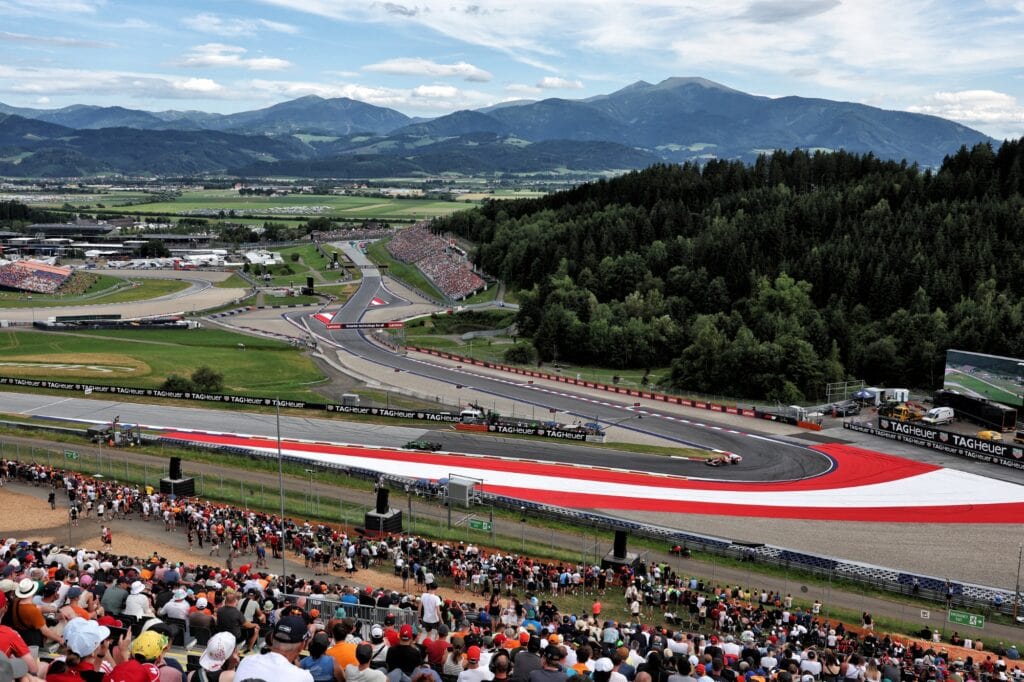
This race shows that a circuit does not need to be long to deliver a strong Formula 1 weekend. The Red Bull Ring is just 4.318 km in length, which makes it one of the shortest tracks on the calendar.
The lap includes steep elevation changes, blind crests, and heavy braking zones. These features keep drivers working from start to finish. There is very little time to rest. For fans, this creates a clear and engaging experience. From many grandstands, you can see around 70 percent of the circuit, so the cars are rarely out of view.
The Austrian Grand Prix is also one of my personal favourites. I have attended twice. One year I stayed about an hour away in an out-of-season ski chalet. Another year I stayed in Vienna and travelled to the circuit each day. The surroundings were different, but the race weekend itself was equally enjoyable both times.
Drivers tend to describe the circuit in a similar way to fans. The lap is short, but demanding. With only ten corners, the fewest of any Formula 1 track, mistakes stand out immediately. There are no easy sections where time can be recovered.
One aspect I always appreciate is how much of the track you can see as a spectator. I have watched sessions from the main grandstand, the Turn One grandstand, and the Red Bull grandstands. Each offers a slightly different view, but visibility is consistently strong. The Red Bull grandstand stands out in particular, as it allows you to follow the cars through most of the lap.
The atmosphere in Spielberg
For most of the year, Spielberg is a quiet village in the Austrian countryside. Outside of race week, very little happens here. When Formula 1 arrives, the atmosphere changes completely.
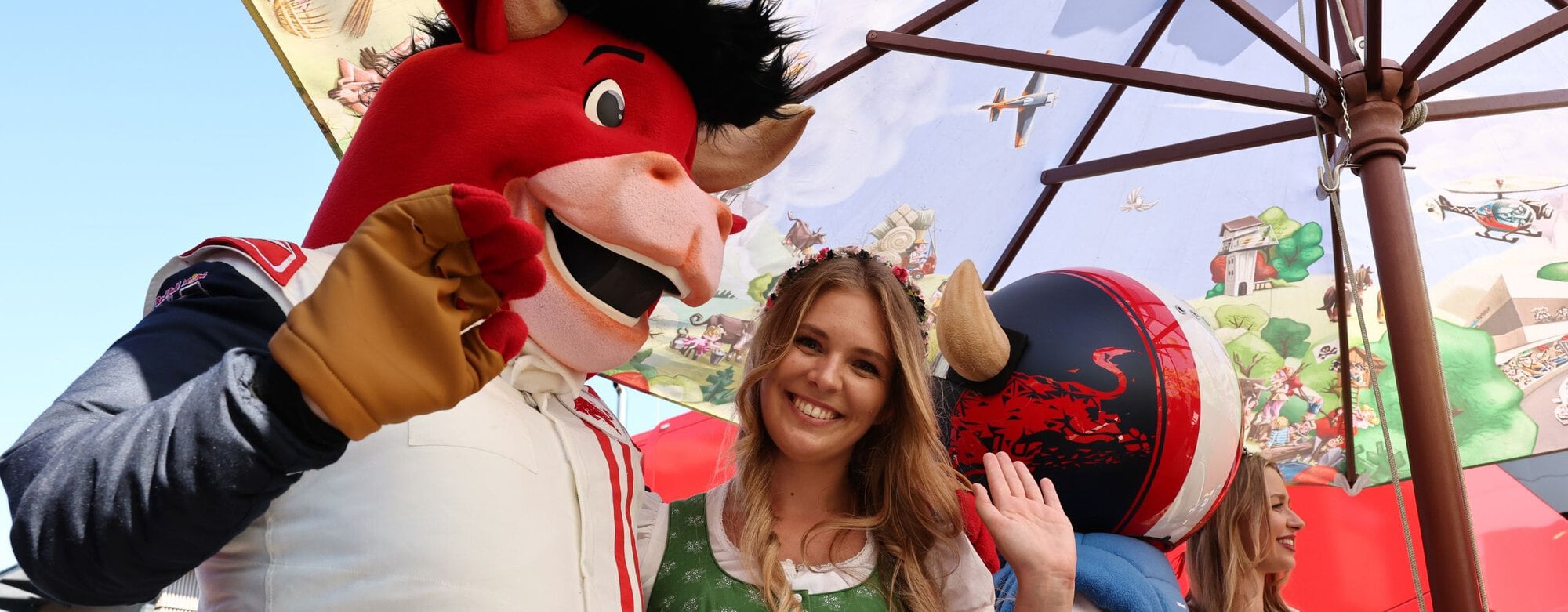
This is Red Bull’s home race. Fans arrive in large numbers, and many wear orange in support of Max Verstappen. During the weekend, the hills around the circuit are filled with colour, noise, and movement.
On both of my visits, what stood out was everything happening between track sessions. Even when the cars were not running, the venue felt active. At different times, I saw skydivers above the circuit, aircraft displays, and a wide mix of unusual cars taking to the track.
There is almost always something to watch. It gives the day a natural rhythm and keeps the energy up from morning through to the final session.
This is one of the reasons the Austrian Grand Prix works so well as a live event. Even during quieter moments, the experience never feels empty.
Travel basics for the Austrian Grand Prix
Most fans travel to the Austrian Grand Prix through one of three cities. These are the main gateways into Austria and the easiest places to begin your journey.
Vienna is the most common entry point. It handles the majority of international flights. From Vienna, the Red Bull Ring is just over two hours away by road or rail.
Graz is closer to the circuit. If you can fly there, you are around one hour from Spielberg, which makes it a convenient base for the weekend. Salzburg is another option, particularly for travellers arriving from elsewhere in Europe. It also offers good onward connections.

Whichever route you choose, it is worth checking visa requirements before you travel. These depend on your nationality and where you are travelling from.
Once in Austria, getting around is straightforward. Public transport is reliable, and the road network is well organised. Even for first-time visitors, travel between cities and to the circuit is generally simple.
Planning your weekend
A full three-day weekend gives you the best experience at the Austrian Grand Prix. There is plenty happening across all three days, and being there from the start helps you follow the event as it builds toward the race.
Friday opens the weekend with practice sessions for Formula 1, along with running for the support series and early qualifying. This is usually the calmest day at the circuit. It is a good time to explore, understand the layout, and settle in before the busier days.
Saturday brings more on-track action. The support series run their sprint races, the Porsche Supercup sessions take place, and Formula 1 completes its final practice before qualifying. The schedule is fuller, and the pace of the day increases. Displays and fan events between sessions help keep things moving.
Sunday is all about the Grand Prix. The feature races for the support series run first, followed by the Porsche Supercup. Drivers arrive at the circuit along a set walking route lined with fans, and the drivers’ parade is always popular. An air display usually follows before the grid is set for the main event.
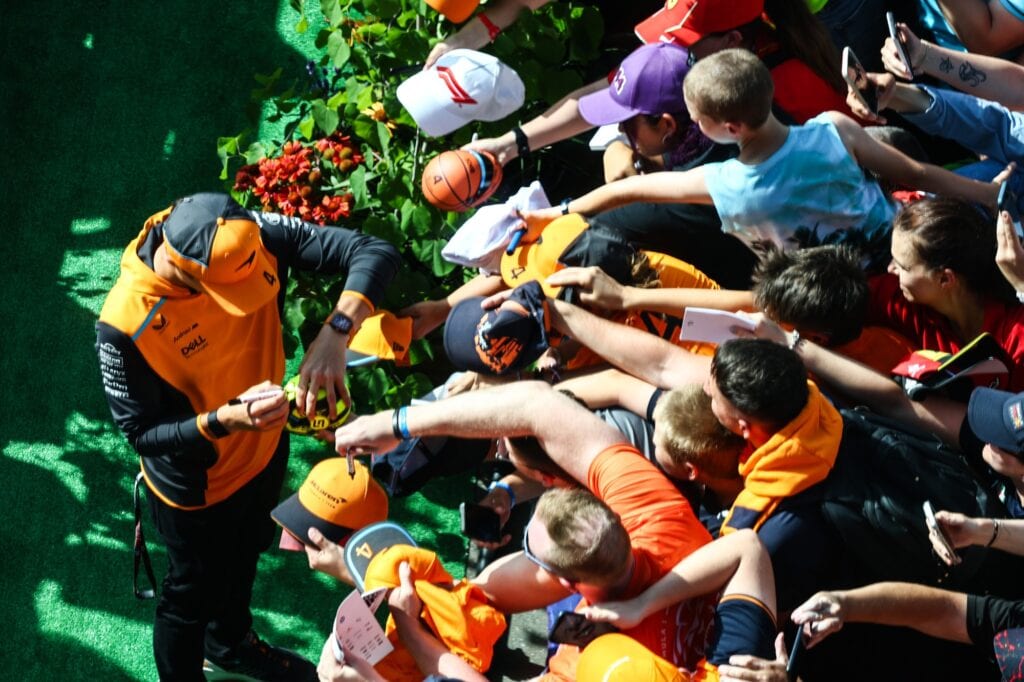
If you have the time, a three-day trip makes it easier to take everything in without feeling rushed, and it gives you the clearest picture of the Austrian Grand Prix weekend.
Where to stay
Camping near the circuit is a tradition for many fans. It is one of the most popular ways to stay close to the track, and the atmosphere becomes part of the weekend. Many campsites are within walking distance of the circuit, which makes getting in and out easy. Some also offer pre-pitched tents, a useful option if you do not want to bring your own equipment.
If you prefer hotels, Vienna offers the widest choice, from simple budget stays to high-end properties. The trade-off is distance. The journey to the circuit is longer, but the city gives you more options in the evenings. Graz is closer, at around an hour from Spielberg, and during race week the city hosts an F1-themed fan event.
Chalets and holiday homes in the nearby ski regions are another popular choice. These are often quieter and work well if you prefer more space or are travelling as a group.
Whichever option you choose, it is important to book early. Accommodation around the Austrian Grand Prix fills quickly once race week approaches.
Where to watch the action
The Red Bull Ring has several strong grandstand options, and each offers a slightly different way to watch the race. When people ask me where they should sit, this is usually how I explain it.
If you want the full race-day buzz, Start–Ziel (the Start/Finish straight) is the place to be. You’ll see the grid forming, the pit stops and the run to the chequered flag.
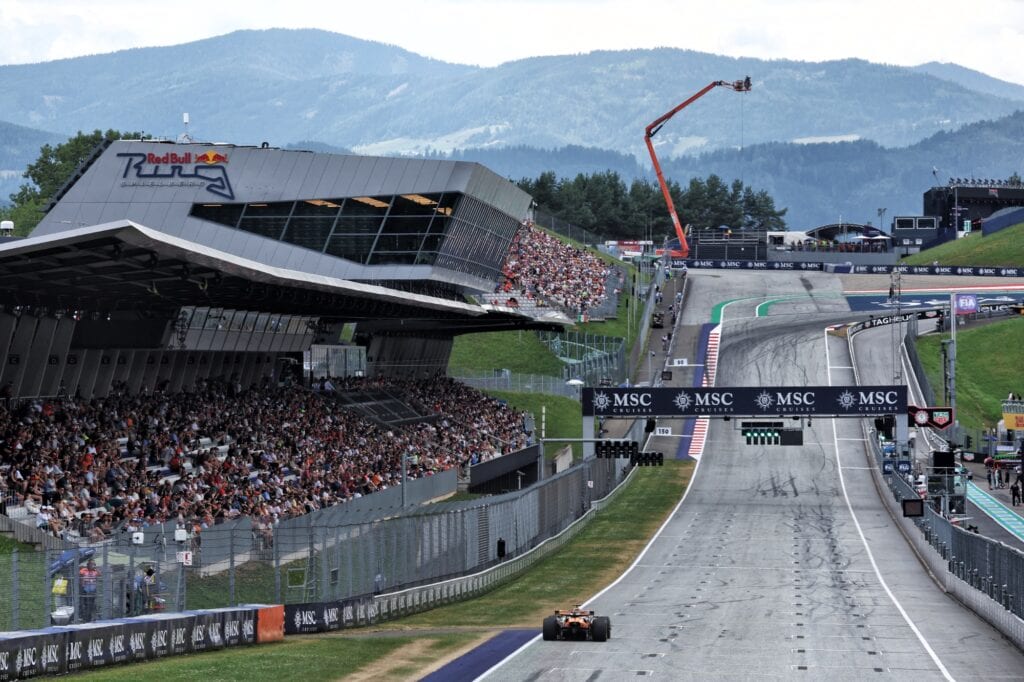
If you are looking for overtakes and close racing, Steiermark at Turn 1 or the grandstand at Turn 3 are both good choices. These are heavy braking zones, where drivers slow the cars aggressively to make the corner. That creates opportunities for late moves and side-by-side battles.
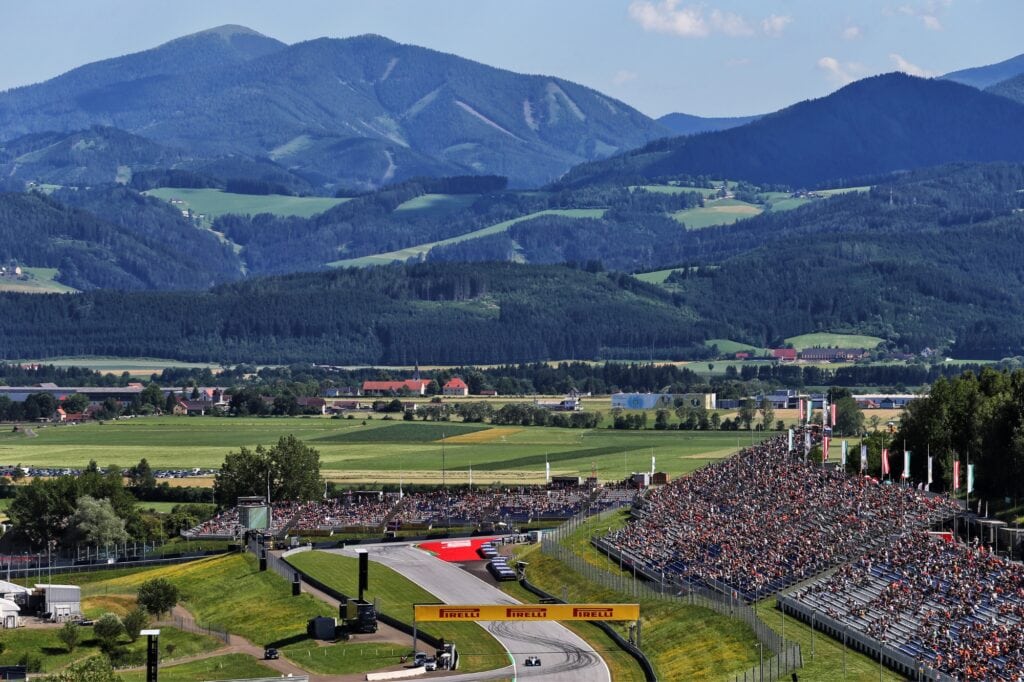
Want to watch drivers push right to the edge? Choose Turn 10 for final-corner commitment and last-lap duels.
Multi-corner tickets are available if you want a different view each day.

After race weekend
When the chequered flag falls, the weekend does not have to end immediately. The Austrian Grand Prix takes place in Styria, a rural region with walking trails, mountain views, and small towns that are easy to explore at a relaxed pace.
Vienna is another natural extension to the trip. It is known for its art, historic buildings, and café culture, and works well if you want to spend a few days in a larger city. Graz, which is closer to the circuit, offers a quieter experience. Its compact old town is easy to explore and fits neatly around a race weekend.
If your journey takes you through Salzburg, Hangar-7 is worth a visit. Inside, you can see Red Bull Racing cars such as the RB8 and RB9, the Scuderia Toro Rosso STR5, along with aircraft from The Flying Bulls collection.
The Austrian Grand Prix works well as part of a wider trip. With several places nearby, it is easy to extend your stay and make more of the journey before heading home.