If you love Formula 1, Suzuka is one of those must-see circuits. But what if the Japanese Grand Prix could be more than just a weekend at the track? There’s something special about pairing a Formula One race with a true travel experience. Japan delivers both in full. It’s a bucket-list trip waiting to happen.
Whether you’re planning for next season or just dreaming for now, this is what a Grand Prix week in Japan could look like. The roar of F1 cars at Suzuka. Neon nights in Tokyo. Riding the bullet train past Mt. Fuji. Quiet moments in ancient temples. Sake poured fresh in a 300-year-old brewery. It’s the kind of adventure that blends speed with culture, chaos with calm.
What to expect in this guide
• Why the Japanese Grand Prix should be on your F1 bucket list • Where is the circuit? • Travelling to Japan: what you need to know • How many days should you spend at the Japanese Grand Prix? • Japanese Grand Prix weekend schedule at a glance • Best places to stay for the Japanese Grand Prix • Best grandstands for key moments at the Japanese Grand Prix • Where to go next after your trip to the Japanese Grand Prix • Frequently asked questions
Estimated Reading Time: 8 minutes
Days 1 & 2: Tokyo
Welcome to Tokyo. Kick things off in Japan’s fast-moving capital.
On Day 1, head straight to Shibuya Crossing, one of the busiest intersections in the world and a classic photo stop. Grab some Japanese snacks from a depachika food hall tucked under the city, then escape the crowds at Meiji Shrine. It’s calm, peaceful, and a surprising break from the noise. Finish the day with a walk through Harajuku’s colourful streets and quirky fashion scene.
Barrels of Sake at Meiji Shrine
Day 2 is all about traditional Tokyo. Wander through Asakusa, with its snack-filled Nakamise Street leading to Senso-ji, Tokyo’s oldest temple. In the afternoon, make your way to Ueno Park. It’s home to museums, markets, and quiet gardens where you can slow things down.
Senso-ji Temple
Day 3: Mishima
Leave Tokyo behind and board the Shinkansen, Japan’s famous bullet train. It’s just 45 minutes to Mishima using your JR Rail Pass.
Here, the big draw is Mishima Skywalk, the longest pedestrian suspension bridge in Japan with views of Mt. Fuji on a clear day. Spend time in local parks, visit the historic Mishima Shrine, and take a relaxed walk through the waterways that run through town.
Mt. Fuji
Optional Day: Kawanehon
If you’ve got the time and love the outdoors, add a detour to Kawanehon Village. This peaceful spot is great for hikes around Sumatakyo Gorge and soaking in an onsen. It’s a quiet, off-the-beaten-path stop that shows a different side of Japan.
Days 4–7: Nagoya & Suzuka (Japanese Grand Prix)
From Mishima, head to Nagoya by bullet train, just over an hour. From there, it’s race time.
Suzuka is one of Formula 1’s most iconic circuits. It’s seen championship wins by Damon Hill, Michael Schumacher, Ayrton Senna, Mika Häkkinen, and Sebastian Vettel. With high-speed corners like the Esses, Spoon curve, and the legendary 130R, it’s a true driver’s circuit.
Michael Schumacher on the Suzuka podium in 2000
Plan to spend three days at the track, from Friday to Sunday. Friday is all about F1 practice and support series action. Saturday ramps up with Porsche Carrera Cup qualifying, final F1 practice, more support races, and the all-important qualifying session. Sunday is race day, complete with the drivers’ parade, support races, and the Grand Prix itself.
Travel Tip: The easiest way to get from Nagoya to Suzuka is by direct bus. It takes about two hours and cuts out the need to change trains or queue for connections. It’s less flexible than the train but much more straightforward on race weekend.
Where to Sit: Each stand at Suzuka gives a different view. V1 and V2 are great for race starts and dramatic finishes. B, C, and D let you watch the flow through the ‘S’ curves. Grandstand I is the spot if you want to see overtakes at the hairpin.
The ‘S’ curves (Grandstands B, C and D)
Days 8 & 9: Kyoto
Hop back on the bullet train and in just 34 minutes, you’re in Kyoto. Start with a visit to Fushimi Inari Taisha, known for its endless rows of bright red torii gates. Then head to a 300-year-old sake brewery, Kyoto’s oldest, for a deep dive into sake production and tasting.
Fushimi Inari Taisha gates
In the afternoon, walk the Path of Philosophy, a cherry tree-lined route that passes temples like Ginkaku-ji and Nanzen-ji. Or, swap that for a visit to Kinkaku-ji, the famous Golden Pavilion, or a wander through Kyoto’s preserved wooden streets.
Kinkaku-Ji Golden Pavilion
Day 10: Departure or Hiroshima
If you’ve got a bit of time left, Hiroshima is just two hours away by train. Visit the Peace Memorial Park and the haunting A-Bomb Dome. If not, wrap up your trip and catch your flight home from Osaka or Nagoya.
Hiroshima Peace Memorial Park
Best booking resources for F1 trips
Planning the trip is the fun part for some and a chore for others.
If you would rather not handle all the details yourself, we can do that for you.
Take a look at our Grand Prix ticket & travel packages »
Prefer to do it all yourself? You’re welcome to take everything you’ve learned here and book your own trip. These are good places to start. They’re reliable, easy to use, and usually the best value.
Tickets
Grand Prix Tickets is the agency I’ve trusted for years. They’ve always been reliable, easy to deal with, and quick to help if something comes up.
Hotels
ZenHotels is one of my go-to sites for hotel bookings. It pulls prices from many smaller sites you might not know about, which makes it good for finding deals. I also check Expedia and Booking.com when I want more options.
Excursions
Viator is full of walking tours, attraction tickets, and local experiences. It’s especially handy if you’re heading to a new Grand Prix city. It’s a good place to find extras to add to your trip.
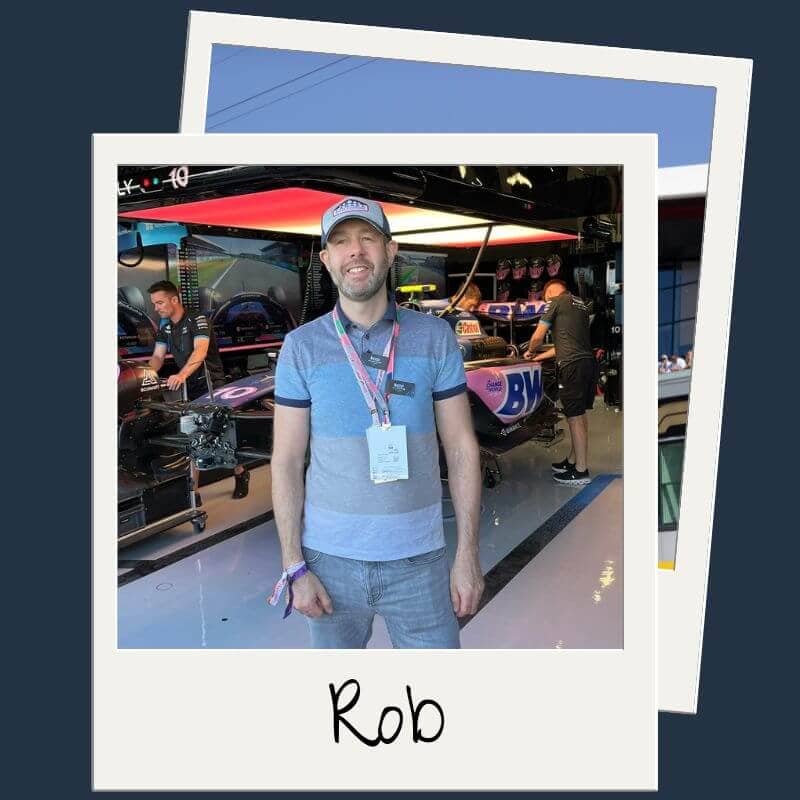
Rob is an experienced independent travel consultant and travel content creator.
His love for Formula One started in the 1990s, watching the greats like Ayrton Senna, Michael Schumacher, and Mika Hakkinen. He traveled to his first Grand Prix in 1999. It was the Spanish Grand Prix in Barcelona. Since then, Rob has traveled to over 2/3 of Grand Prix’ on the current Formula One calendar.
Fast forward to today, and Rob has turned his passion into a career, dedicating his time to helping others plan their dream Formula One trips.
His favourite Grand Prix destinations are Austria and Austin, and when he’s not attending a Formula One Grand Prix, you’ll find him closer to home, walking or cycling in the Peak District National Park.
Featured Articles
Find Your Next Grand Prix Adventure!
Excited about the next Formula One season? If you'd like to attend a Grand Prix, you're in for a treat. Discover where Formula 1 could take you.
5 Reasons Why the Singapore Grand Prix Should Be on Your F1 Bucket List
Few races capture the magic of Formula 1 quite like the Singapore Grand Prix. With its night-time setting, unbeatable city-center location, and thrilling street racing, here are five reasons why it’s an experience every F1 fan should have.
What’s it like to experience Formula 1 in the heart of motorsport’s most glamorous setting? We asked Marc Priestley, former McLaren race mechanic and pit lane insider, to share his take on the Monaco Grand Prix.
Choosing the right vantage point can change everything about a race weekend. Whether you want sweeping views, non-stop action, or a bit of both, these spots guarantee you won't miss a thing.
Choosing the right vantage point can change everything about a race weekend. Whether you want sweeping views, non-stop action, or a bit of both, these spots guarantee you won't miss a thing.
You've likely come across Champions Club when looking at Grand Prix tickets. But what do you actually get? This guide covers everything included, from the paddock tour to the grid walk, so you can decide if it's right for your race weekend.