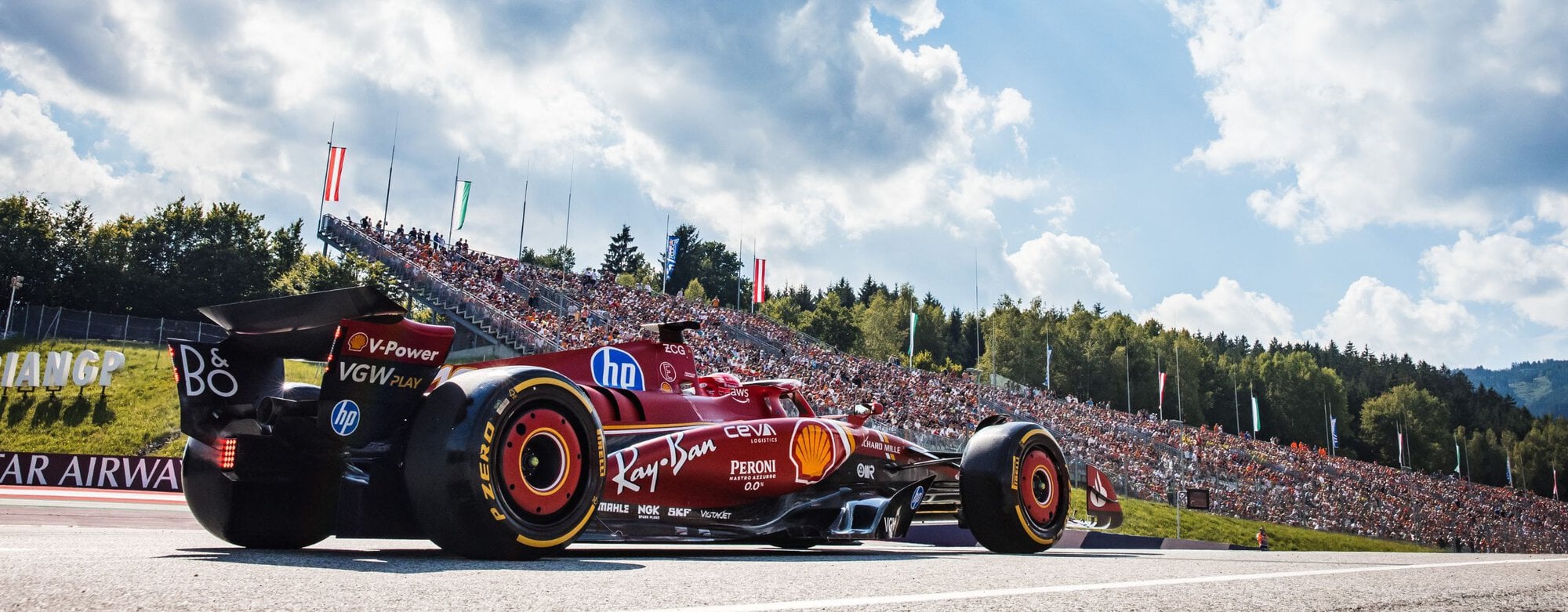
Last updated February 2026
The Red Bull Ring might be one of the shortest tracks on the F1 calendar, but it delivers in a big way. From steep climbs to blind apexes and heavy braking zones, this place keeps drivers on their toes and fans on the edge of their seats.
What to expect in this guide
• Why the Austrian Grand Prix should be on your F1 bucket list
• Where is the circuit?
• Travelling to Austria: what you need to know
• How many days should you spend at the Austrian Grand Prix?
• Austrian Grand Prix weekend schedule at a glance
• Best places to stay for the Austrian Grand Prix
• Best grandstands for key moments at the Austrian Grand Prix
• Where to go next after your trip to the Austrian Grand Prix
• Frequently asked questions
Estimated Reading Time: 8 minutes
Why the Austrian Grand Prix should be on your F1 bucket list
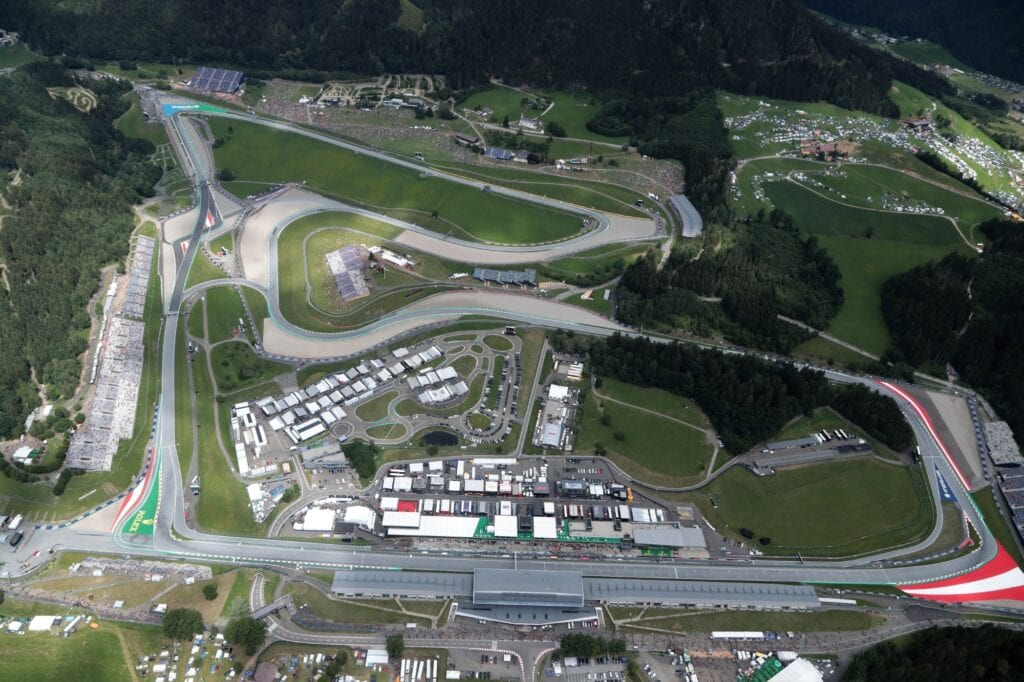
Tucked away in the Styrian Alps, the Red Bull Ring is one of the most unique stops on the Formula 1 calendar. It may be short, just 4.318 km, but don’t let that fool you. This place can bite.
With only 10 corners, it has the fewest turns of any track on the calendar. But what it lacks in length, it makes up for in challenge. The layout includes steep elevation changes, blind crests, and tricky off-camber sections. Drivers love it, but they also respect it. Nico Hülkenberg calls it “a short track that packs in a lot of fun.” Pierre Gasly describes it as “a deceptively tough lap.” It’s one of those circuits where every millimetre matters.
On top of that, it’s often a Sprint weekend. That means teams get just one practice session before going straight into qualifying. There’s no time to waste. Setups need to be right from the start, and there’s little room to recover if they’re not.
Spielberg might be a quiet countryside village for most of the year, but race week transforms it completely. The track has seen plenty of big moments in recent years. Since returning to the calendar in 2014, the Austrian Grand Prix has produced drama, surprises, and standout drives. Mercedes dominated the early years of the hybrid era here. Red Bull has since turned it into a stronghold. But it hasn’t always gone their way.
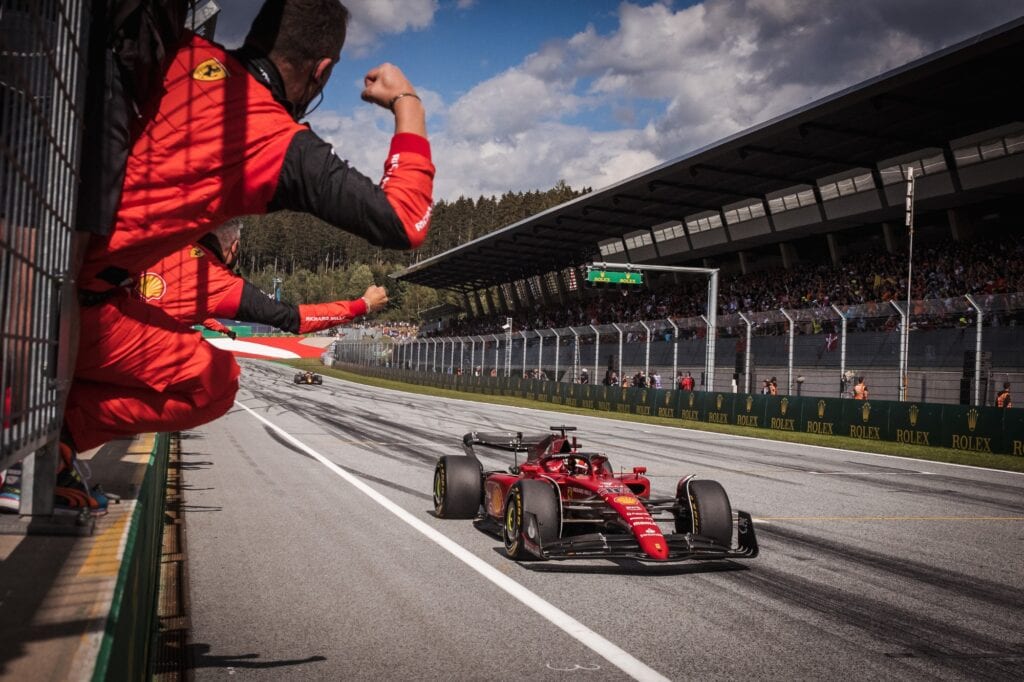
In 2022, Charles Leclerc broke their home winning streak. He passed Max Verstappen multiple times and delivered a clinical drive for Ferrari. It was a highlight in a season full of ups and downs. McLaren’s Lando Norris also has fond memories of Spielberg. This is where he scored his first F1 podium. It proved that with the right setup and a bit of luck, even midfield cars can challenge the frontrunners.
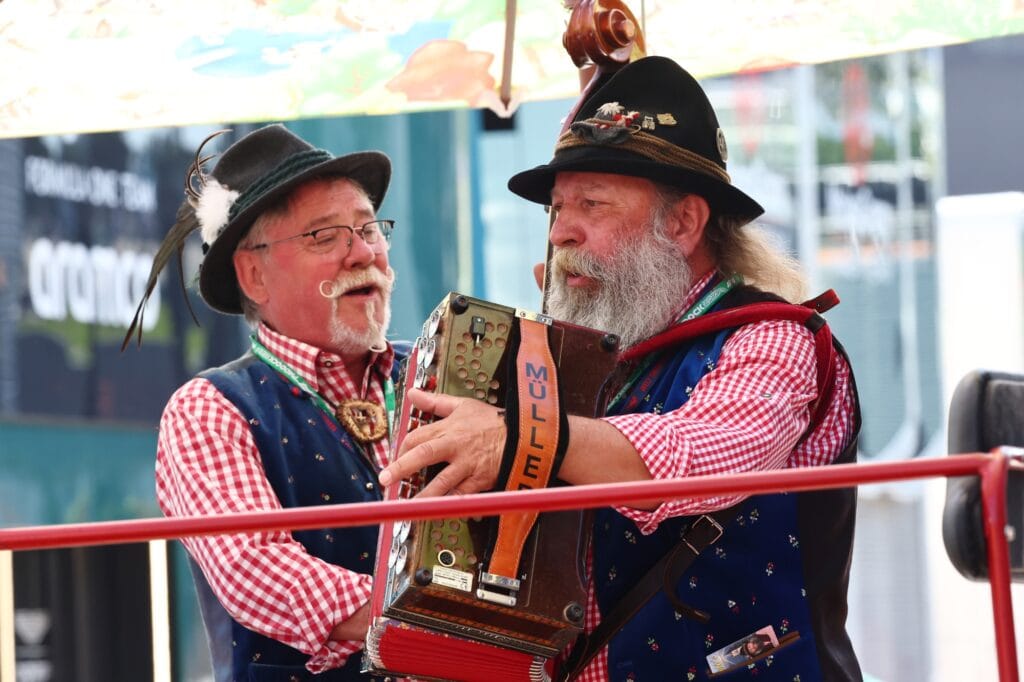
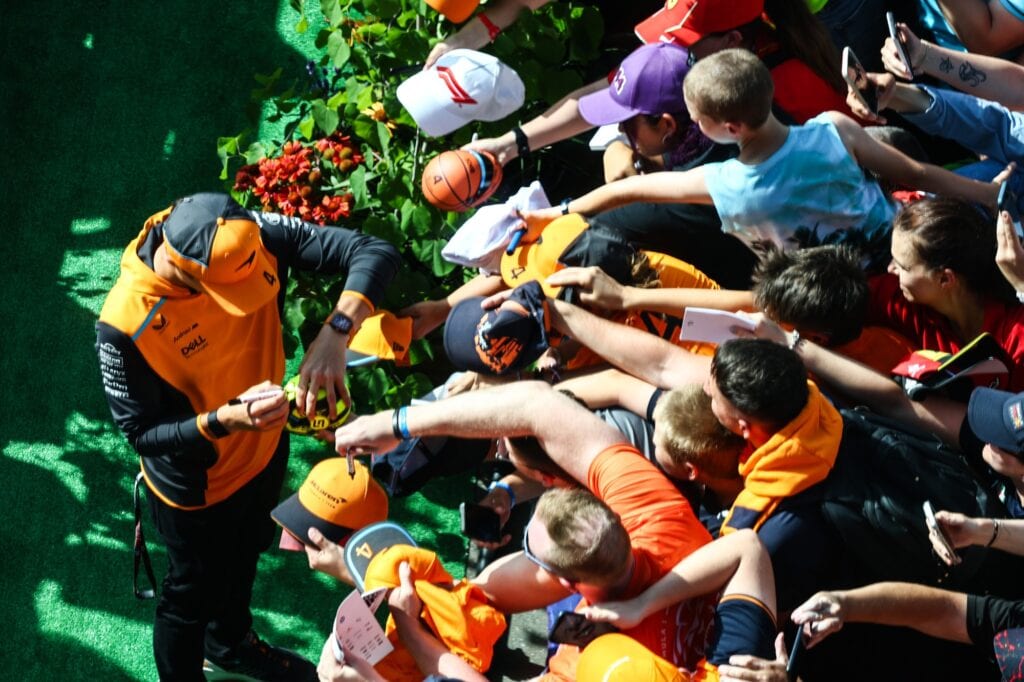
The Austrian Grand Prix is Red Bull’s home event, and you can feel that energy throughout the weekend. Every year, the stands fill with the Orange Army. Their presence turns the atmosphere into something special.
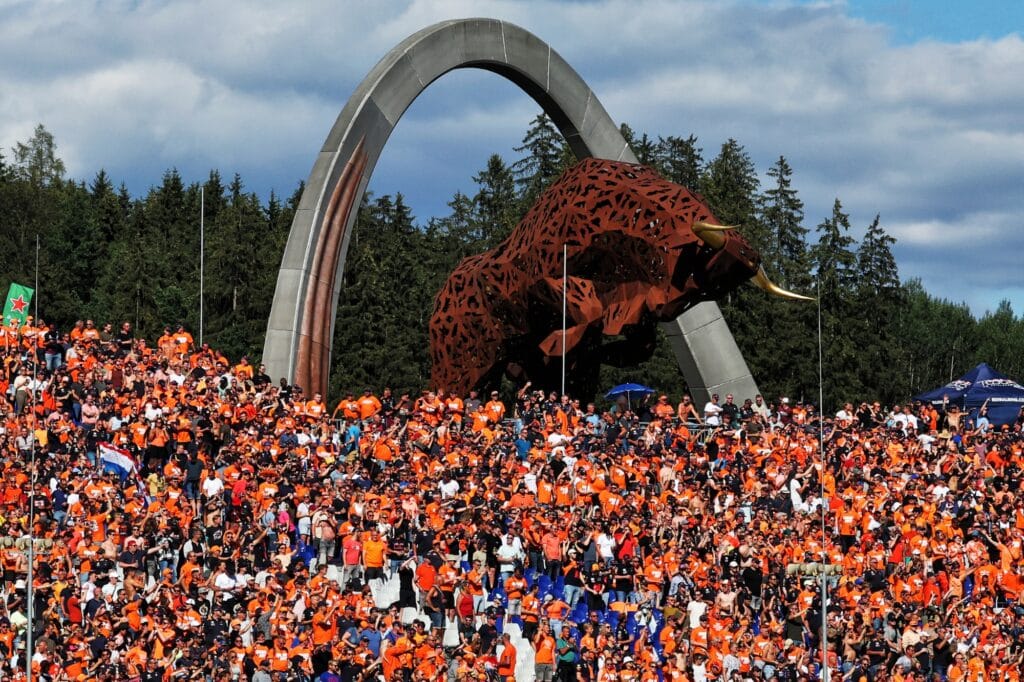
When the race begins, the noise rolls across the valley like thunder. The whole venue comes alive. It’s not just about the racing either. There’s a bit of theatre to the weekend. Expect skydivers, stunt planes, live music, and a few festival touches that reflect Red Bull’s homegrown style. It all adds to the sense that this is more than a standard Grand Prix.
Where’s the circuit?
The Red Bull Ring is in Spielberg, a small town surrounded by the Styrian mountains. It’s peaceful, green, and full of alpine charm. For many teams and fans, the fresh air and scenery are a welcome change from the usual big-city circuits.
Traveling to Austria & the RedBull Ring: What you need to know
Most fans heading to Spielberg start their journey in Vienna or Graz. Both cities are well connected, with Vienna handling most international arrivals. Graz is closer, just an hour from the circuit, and Salzburg is another option if you’re coming from within Europe.
The drive from Vienna takes a little over two hours. Salzburg is about two hours and 45 minutes away. The route through the Austrian countryside sets the mood before you even reach the track.
While many race goers can visit Austria without a visa, the exact duration and requirements can vary, so it’s advisable to check the specific visa requirements based on your nationality before planning your trip.
How many days should you spend at the Austrian Grand Prix?
We recommend spending three full days, from Friday to Sunday, at the Austrian Grand Prix to experience everything the event has to offer. Between F1 sessions, you’ll also get to enjoy a full schedule of Formula 2, Formula 3, and Porsche Supercup, plus skydivers, flyovers, and stunt planes making it a weekend packed with non-stop action.
Austrian Grand Prix weekend schedule at a glance
Here’s a quick overview of what to expect each day at the Austrian Grand Prix.
Friday is action-packed with Formula 1 practice sessions, along with qualifying sessions for the support series, including Formula 2, Formula 3, and the Porsche Supercup.
Saturday begins with the Formula 3 Sprint Race, followed by the Porsche Supercup qualifying, the third F1 practice session, additional support series races, and culminating in the thrilling Formula 1 qualifying session.
Sunday features support series races, the drivers’ parade, and the highlight of the weekend—the Monaco Grand Prix.
Best places to stay for the Austrian Grand Prix
A lot of fans camp near the circuit, and for good reason. Waking up to mountain views and the sound of F1 engines in the distance is something you don’t forget. Some campsites even offer pre-pitched tents, so you don’t need to bring your own gear.
If you’re looking for more comfort, Vienna has the widest range of hotel options. You’ll find everything from budget rooms to luxury hotels. The city itself is stunning, full of history, art, and architecture. But it’s over two hours from the track, so be ready for early mornings and late nights if you stay there.
Check out accommodation options in Vienna here
Graz is much closer, about an hour from the Red Bull Ring. It’s a popular base for many fans. Hotel options are more limited than in Vienna, but still cover most budgets. The city also runs an F1-themed fan event during race week, which helps keep the buzz going even when you’re away from the circuit.
Check out accommodation options in Graz here
Another good option is to rent a chalet or holiday home. Austria has plenty, especially in the ski areas. Since the Grand Prix is held in summer, prices are often lower and availability is better than in winter.
Check out accommodation options in Styria here
Whether you prefer a tent, a hotel room, or a quiet mountain cabin, it’s a good idea to book early. Places fill up quickly once the race weekend gets close.
Best grandstands for key moments at the Austrian Grand Prix
The Red Bull Ring is one of the shortest circuits on the Formula 1 calendar, and most of the lap is visible from a number of grandstands. The track sits in a natural amphitheatre, and the elevation around the circuit opens up wider views than at most venues.
Most of the on-track overtaking happens between Turns 1, 3, and 4.
The Main Grandstand runs along the start-finish straight and is the only covered grandstand at the circuit. The Steiermark Grandstand, also known as the Lauda Grandstand, sits at Turn 1. The Red Bull Grandstands run between Turn 1 and Turn 3. The Turn 3 and Turn 4 grandstands cover the heaviest braking zones on the lap.
General Admission is also worth considering. The natural elevation around the venue means many General Admission areas have decent views of the track.
Where next?
If you’re planning to extend your trip, Austria has plenty to offer beyond race weekend.
Styria, the region around the Red Bull Ring, is a peaceful spot to slow down. Think forest trails, mountain views, and quiet towns. It’s a great place to reset after the noise and pace of the Grand Prix.
Vienna is just over two hours from the circuit and has a completely different vide. It’s a grand city, filled with history, art, and some of the best coffee houses in Europe.
Graz is even closer. It has a relaxed feel, a charming old town, and great food. Both cities make an easy and worthwhile addition to your trip.

Flying through Salzburg? Make time for Hangar-7. It’s a one-of-a-kind museum for Formula 1 and aviation fans, especially if Red Bull is your team.
The collection includes Red Bull Racing F1 cars like the RB8 and RB9—both championship winners with Sebastian Vettel—and the Scuderia Toro Rosso STR5, once driven by Sébastien Buemi and Jaime Alguersuari. There’s also the Sauber Petronas C20 and several iconic aircraft, including the North American B-25J “Mitchell” and planes from The Flying Bulls’ fleet.
The building itself is a work of art, with sleek, modern architecture. And entry is free.