Some Grand Prix weekends feel like a breeze. Others? Not so much.
If you’ve ever come home from a race feeling like you need another holiday to recover, you’re not alone. The truth is that some Formula 1 races are simply easier than others. They’re quicker to reach, simpler to navigate, and keep hotels, restaurants and transport links close by.
If you want to experience a Grand Prix without the travel headache, these are the races that stand out.
What to expect in this guide
• Getting there • Street circuits make life easy • Permanent circuits that are still easy • The races that take more effort • When to go, and what to expect • Extending your trip beyond the Grand Prix • Lessons from the road • The bottom line • Best booking resources for F1 trips • Frequently asked questions Estimated Reading Time: 8 minutes
Getting there
Getting to a Grand Prix is often half the trip, so it helps to know which races are simple to reach. A quick word on flights that involve the United States. If you’re bound for Canada or Mexico, it’s worth avoiding a US layover, because even changing planes there means arranging US travel permission, an ESTA or a visa. A direct or European route avoids that step. And for the US races, if you can’t fly direct, it helps to connect through a smaller airport. Places like Charlotte, Detroit and Minneapolis handle fewer international flights, so immigration queues tend to be shorter, getting you through faster and lowering the risk of missing your connection.
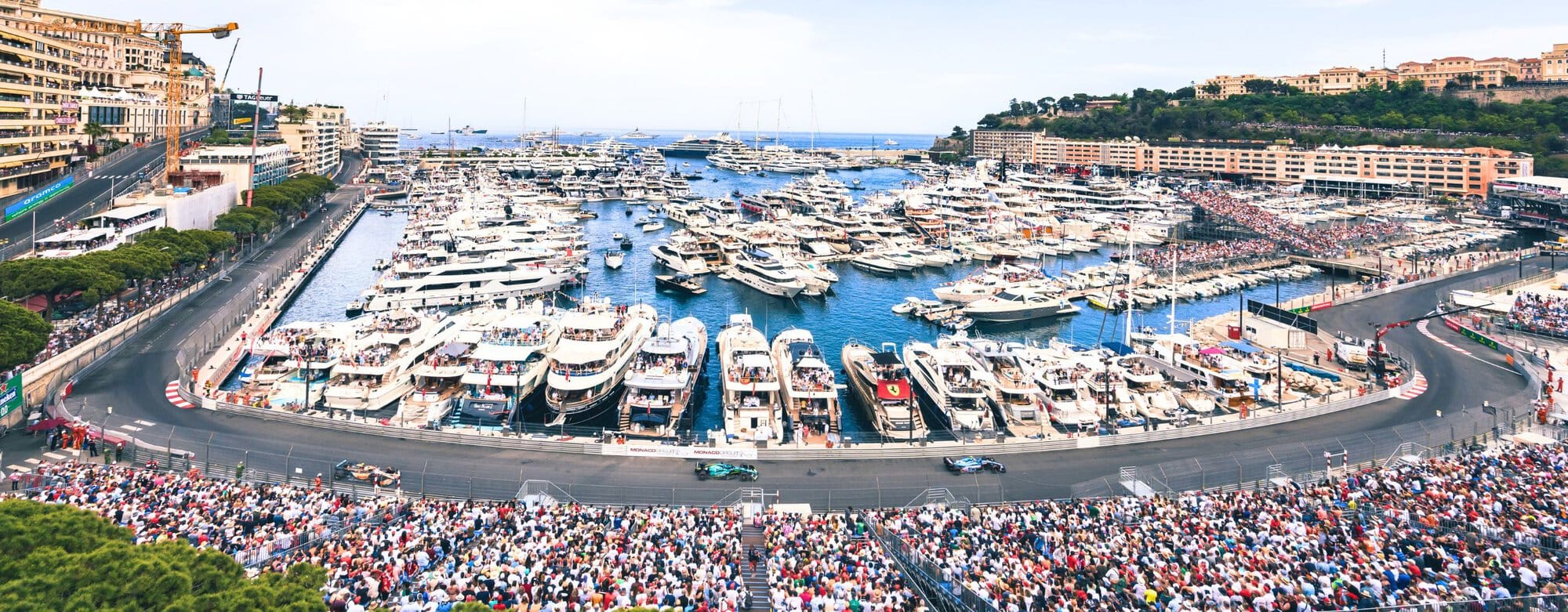
Races in Europe are generally simple to reach, with direct flights to nearby cities. Barcelona, Madrid and Budapest all have direct flights from within Europe and further afield, while the Monaco Grand Prix is served by nearby Nice. Faro is the best airport for the Portuguese Grand Prix, again well connected across Europe.
Further afield, it varies more. Abu Dhabi is among the easiest long-haul races to reach, a short drive from the airport and served by direct flights from much of the world. Singapore is similar, well connected and close to the city. Japan takes a little more doing, since its nearest base, Nagoya, is less well connected than Tokyo or Osaka, though once you land the rail network takes over and the onward journey is simple. Australia is the longest haul of all, usually a single stop through the Middle East or Asia, so it’s a race you plan around rather than drop into.
Across the Atlantic, Montréal is the easy one for European fans, with direct flights from several cities and no need to route through the US. The American races are simple to fly into as well, with Miami, Austin and Las Vegas all well served. Mexico City has daily direct flights from major European cities, plus connections through the US and Canada.
Street circuits make life easy
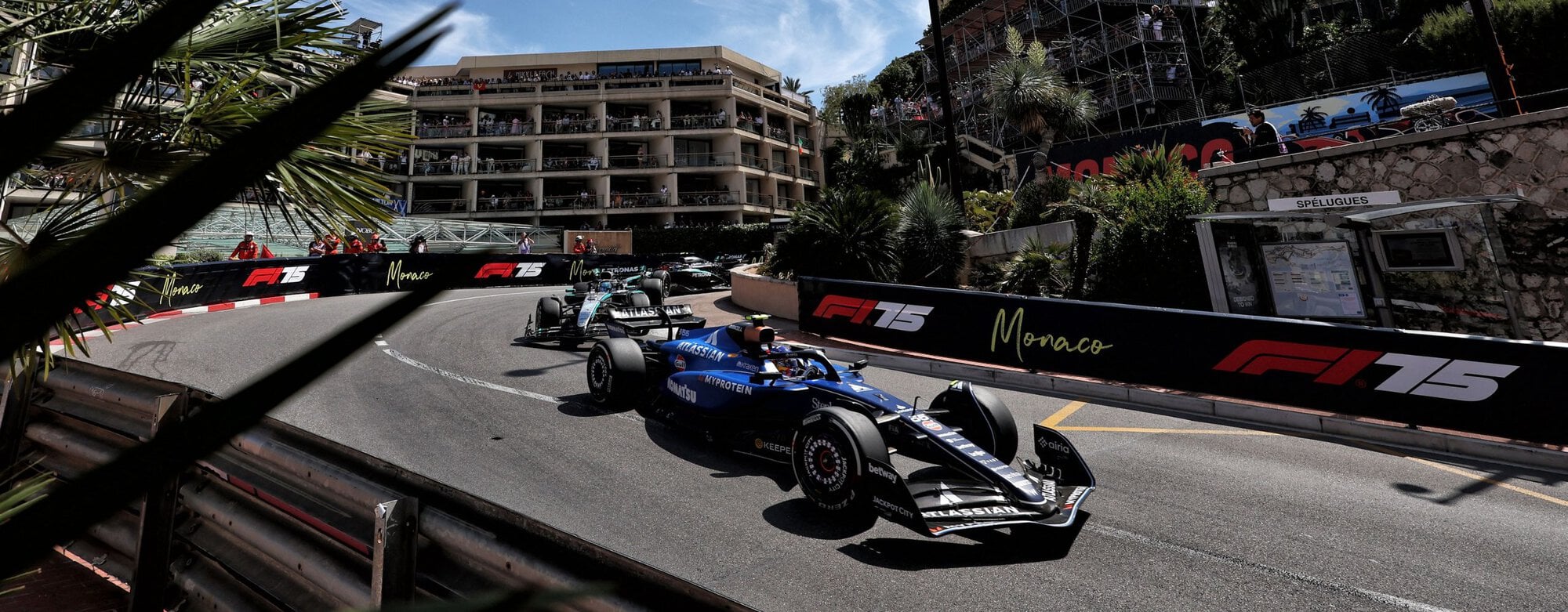
Street circuits are almost always the most convenient option. Because they’re located in or just outside the city centre, you’re often within walking distance of the circuit, your hotel and somewhere to grab a drink or dinner after the race.
Think Melbourne, Monaco, Montréal, Las Vegas, Singapore, Madrid and Miami. At these races, the city becomes part of the Formula 1 experience, making it easy to combine sightseeing with race weekend.
Circuit Gilles Villeneuve with the Montréal skyline in the distance
Of course, convenience comes at a price. Hotels closest to the circuit are often the first to sell out, with fans competing against Formula 1 teams, media and sponsors for accommodation. It’s simple supply and demand.
That doesn’t mean there aren’t good-value alternatives. Staying in Nice instead of Monaco, for example, still gives you an easy commute and often significantly lower hotel prices.
Permanent circuits that are still easy
Not every easy race weekend takes place on a street circuit. Plenty of permanent venues are just as convenient, and it usually comes down to how you get in: on foot, by shuttle, or by rail.
Abu Dhabi is the standout. Yas Island has several hotels within walking distance of the circuit, so you can walk back to your room after the race and avoid the crowds altogether. Those hotels come at a premium, though. Stay somewhere cheaper, a short drive away, and you meet the one real catch: thousands of fans leaving at once, with taxis and rideshares hard to find. If that’s you, it’s often better to settle into one of the island’s bars or restaurants for an hour and let the crowds thin out.
Yas Marina Circuit in Abu Dhabi has hotels close by so you can walk to the circuit
Several other venues rely on shuttle buses instead. Bahrain runs complimentary buses from hotels across Manama. Austin has improved considerably, its downtown shuttle to Circuit of The Americas now moving fans on hundreds of buses, efficiently enough that we once had a police escort. And the Portuguese Grand Prix, back on the calendar for 2027 and 2028 in place of Zandvoort, is likely to put on a free shuttle from the nearby towns of Portimão and Lagos, similar to the service that ran at the previous F1 Grand Prix and at the MotoGP.
Others are best reached by rail. Mexico City, São Paulo’s Interlagos and Qatar’s Lusail all sit near Metro stations that run you almost to the gate. Zandvoort is the pick of them, about half an hour by train from Amsterdam and an easy walk along the promenade once you arrive, though 2026 is its final race for now. Japan has caught up too, with a direct bus from Nagoya to Suzuka sparing fans the queues that used to build up changing from train to shuttle.
Autódromo Hermanos Rodríguez in Mexico City
The races that take more effort
Not every race can be easy, and it’s only fair to be honest about the ones that take more planning. A few are worth going out of your way for anyway.
Baku is a good example. Once you’re there, the street circuit is as convenient as any, but getting to Azerbaijan in the first place is the catch. Direct flights are few and far between, and the ones that do exist often leave at awkward hours. It’s doable, but it takes more thought than most.
Spa-Francorchamps is hard to call travel-friendly. It sits well outside any major city, the weather is famously changeable, and reaching it takes some planning, though there are several ways to do it. Even so, it’s a circuit every fan should see at least once, and most who make the effort are glad they did.
Silverstone is much the same. It’s in the middle of the English countryside, so it’s not the easiest to reach, and the weather can turn at any point across the weekend. But as the home of the British Grand Prix, it’s a bucket-list trip for any Formula 1 fan.
Baku City Circuit in Azerbaijan
When to go, and what to expect
Weather can shape a race weekend as much as anything, from what you pack to how comfortable you are in the grandstand.
Some races are changeable. Melbourne and Montréal can go either way. One year the weather is glorious across the whole weekend, the next it’s a mixed bag of downpours, so it’s worth packing for both. Miami is prone to the odd downpour too, and in recent years the timings have been adjusted to avoid the thunderstorms that are common in that part of the world.
Others are more settled. Madrid in September is usually warm and dry, and Abu Dhabi in November is reliably pleasant.
A couple catch people out. Las Vegas sits in the desert, so fans expect heat, but the race runs at night and the temperature drops sharply after dark, so pack warm layers. Singapore has the opposite problem, where the heat and humidity make walking hard going, so plan for plenty of breaks.
The evening races do have an upside. In Las Vegas and Singapore the cars don’t take to the track until late in the day, which leaves the daytime free to explore the city before the action starts.
Extending your trip beyond the Grand Prix
Several races sit within easy reach of a longer holiday, and a few are worth building a trip around. In Europe, Monaco opens up the rest of the Riviera, from Cannes to the clifftop village of Èze. Monza sits within reach of the Italian lakes. And the Algarve rewards staying on for its coastline, with Lisbon and even Seville in reach for anyone wanting more.
Further afield, Abu Dhabi and Dubai make a good launchpad for the Maldives, Seychelles or Mauritius. Singapore is a natural base for exploring Southeast Asia, with easy stops in Malaysia, Bali and beyond. And since Australia is such a long way to go, the Australian Grand Prix is best treated as part of a bigger trip, with Melbourne and the Great Ocean Road both good reasons to linger.
In the Americas, Montréal opens up Québec, or a run down to Toronto and Niagara Falls. The US races each point somewhere different. Miami sits close to the Everglades and the Florida Keys. Austin puts the Texas Hill Country and the southern music cities within reach. And Las Vegas is a short hop from the national parks of Utah or the coast at San Francisco. Mexico City is worth a few days of its own, with the beaches of the Riviera Maya a short flight away..
Lessons from the road
A few small decisions can make a big difference to your race weekend.
At the first Miami Grand Prix, I ended up waiting almost three hours for a rideshare back from the circuit. A driver would accept the trip, I’d wait, then it would be cancelled and the whole process would start again. If I were going back today, I’d stay in downtown Miami and use the Brightline train service, with the circuit shuttle bus or a rideshare as a backup rather than my main plan.
In Canada, don’t be fooled into thinking it’s a short walk back to Montréal city centre. I made that mistake and walked back across one of the bridges after the race. It took far longer than expected, and I’d have been much better off waiting for the Metro despite the queues.
At the Dutch Grand Prix, the trains ran every five to fifteen minutes all weekend, and I don’t think we queued for more than about twenty minutes at either Amsterdam or Zandvoort. They weren’t overcrowded either, partly because so many Dutch fans cycle to the circuit.
In Mexico City, rideshares like Uber work well for getting around the city, but I’d think twice about using one after the race. Traffic around the circuit can be at a standstill, and even if you manage to book a car, finding your driver among thousands of other fans isn’t always easy. Personally, I’d stick with the Metro.
For remote circuits like the Red Bull Ring, planning ahead pays off. Look for official shuttle buses or organised tours that include transport. Camping is another good option, and many circuits now offer pre-pitched tents so you don’t need to bring your own equipment.
If you’re driving, book your parking as early as possible. Most circuits allow you to reserve parking when you buy your Grand Prix tickets. It won’t eliminate the traffic after the race, but it does make the day far less stressful.
The bottom line
If convenience is high on your priority list, it’s hard to beat Formula 1’s street circuits. You’re rarely far from the action, and staying close means less time travelling and more time enjoying the race weekend.
For the permanent circuits, a little planning goes a long way. Choosing the right hotel, booking official transfers and thinking about how you’ll get to and from the circuit each day can make the difference between a stressful weekend and one you’ll remember for all the right reasons.
Best booking resources for F1 trips
Planning the trip is the fun part for some and a chore for others.
If you would rather not handle all the details yourself, we can do that for you.
Prefer to do it all yourself? You’re welcome to take everything you’ve learned here and book your own trip. These are good places to start. They’re reliable, easy to use, and usually the best value.
Tickets Grand Prix Tickets is the agency I’ve trusted for years. They’ve always been reliable, easy to deal with, and quick to help if something comes up.
Hotels ZenHotels is one of my go-to sites for hotel bookings. It pulls prices from many smaller sites you might not know about, which makes it good for finding deals. I also check Expedia and Booking.com when I want more options.
Excursions Viator is full of walking tours, attraction tickets, and local experiences. It’s especially handy if you’re heading to a new Grand Prix city. It’s a good place to find extras to add to your trip.
FAQ's
Street-circuit Formula 1 races are generally the easiest to attend because the track, hotels, restaurants and nightlife are often within walking distance. Monaco, Singapore and Las Vegas are particularly convenient once you're in the city. Among permanent circuits, Abu Dhabi is one of the easiest, with several Yas Island hotels within walking distance or a short transfer of Yas Marina Circuit.
The Dutch Grand Prix at Zandvoort is one of the easiest F1 races to reach by public transport. Trains from Amsterdam take around 30 minutes, with the circuit accessible from Zandvoort station. However, 2026 is currently set to be the Dutch Grand Prix's final year. Mexico City, São Paulo and Qatar are also relatively straightforward, with Metro or rail connections that take Formula 1 fans close to the circuit.
Most international visitors need permission to travel to the United States, either through the Visa Waiver Program with an approved ESTA or with a US visa. This also applies if you're only changing planes at a US airport. If you're travelling to a Formula 1 race in Canada or Mexico, avoiding a US connection can make the journey simpler if you don't already have the required US travel authorisation.
Staying near the Formula 1 circuit is the most convenient option, but trackside hotels usually sell out quickly and can be significantly more expensive during Grand Prix weekend. For better value, consider staying a short drive from the circuit or in the nearest major city. Before booking, check official shuttle, train and parking options and plan your journey to and from the track for each day of the race weekend.
Formula 1 weather varies dramatically by destination, so check the forecast and pack for the specific Grand Prix. Melbourne and Montréal can experience sunshine, cooler temperatures and rain during the same race weekend, so layers and waterproof clothing are useful. Las Vegas has a desert climate but can feel surprisingly cold at night. Singapore is typically hot and humid, making lightweight clothing, sun protection and regular breaks essential. Comfortable walking shoes are a must for almost every Formula 1 Grand Prix.
Yes. Many Formula 1 races are ideal starting points for a longer holiday. The Monaco Grand Prix can be combined with the French Riviera, while Singapore is a convenient gateway to destinations across Southeast Asia. The Abu Dhabi Grand Prix can be paired with Dubai or a trip to the Maldives. In the United States, Formula 1 races can also form part of a wider road trip, from the Everglades in Florida to the national parks of Utah and the American Southwest. Choosing the right Grand Prix can turn an F1 weekend into a much bigger travel experience.
Rob is an experienced independent travel consultant and travel content creator.
His love for Formula One started in the 1990s, watching the greats like Ayrton Senna, Michael Schumacher, and Mika Hakkinen. He traveled to his first Grand Prix in 1999. It was the Spanish Grand Prix in Barcelona. Since then, Rob has traveled to over 2/3 of Grand Prix’ on the current Formula One calendar.
Fast forward to today, and Rob has turned his passion into a career, dedicating his time to helping others plan their dream Formula One trips.
His favourite Grand Prix destinations are Austria and Austin, and when he’s not attending a Formula One Grand Prix, you’ll find him closer to home, walking or cycling in the Peak District National Park.
Featured Articles
Find Your Next Grand Prix Adventure!
Excited about the next Formula One season? If you'd like to attend a Grand Prix, you're in for a treat. Discover where Formula 1 could take you.
5 Reasons Why the Singapore Grand Prix Should Be on Your F1 Bucket List
Few races capture the magic of Formula 1 quite like the Singapore Grand Prix. With its night-time setting, unbeatable city-center location, and thrilling street racing, here are five reasons why it’s an experience every F1 fan should have.
What’s it like to experience Formula 1 in the heart of motorsport’s most glamorous setting? We asked Marc Priestley, former McLaren race mechanic and pit lane insider, to share his take on the Monaco Grand Prix.
Choosing the right vantage point can change everything about a race weekend. Whether you want sweeping views, non-stop action, or a bit of both, these spots guarantee you won't miss a thing.
Choosing the right vantage point can change everything about a race weekend. Whether you want sweeping views, non-stop action, or a bit of both, these spots guarantee you won't miss a thing.
You've likely come across Champions Club when looking at Grand Prix tickets. But what do you actually get? This guide covers everything included, from the paddock tour to the grid walk, so you can decide if it's right for your race weekend.