Precision, history, and high-stakes racing: Welcome to Monaco
Sunday December 6 2026
Last updated May 2026
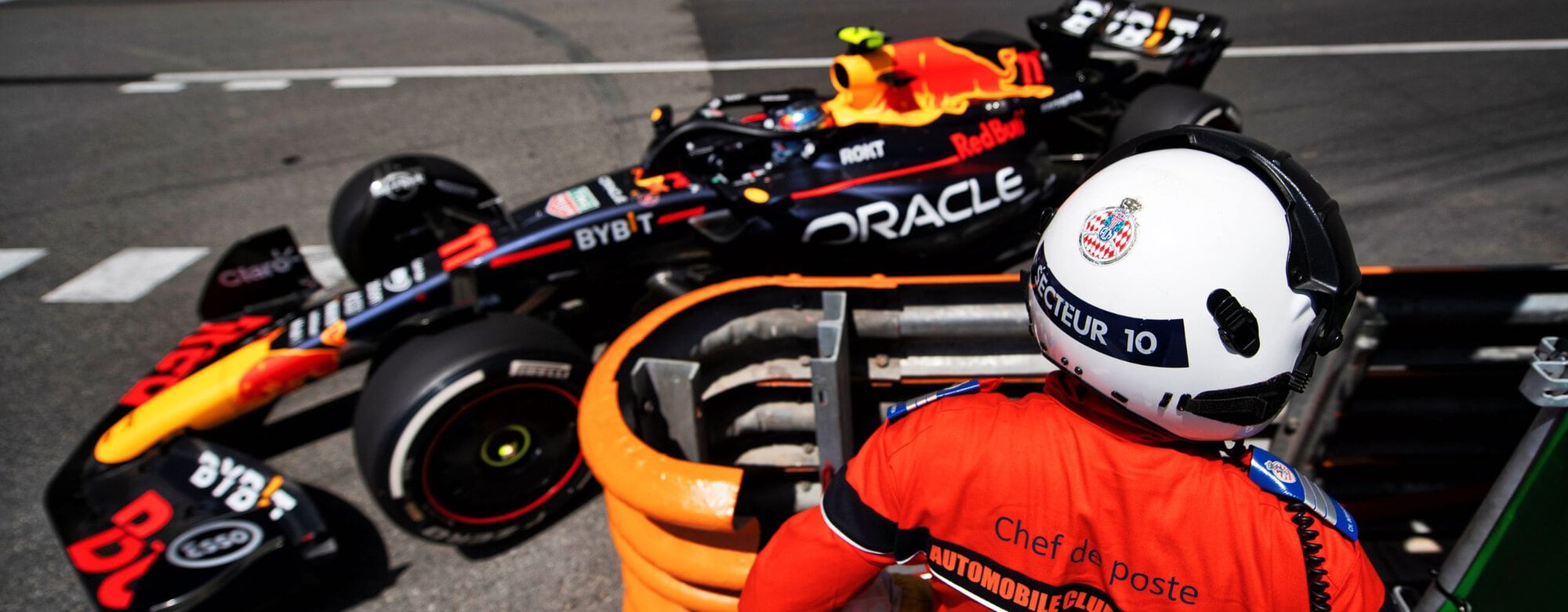
Monaco asks more of drivers than any other race. The margins are tiny, and a single mistake usually ends the weekend against a barrier.
Here’s what makes the Monaco Grand Prix worth attending, what the weekend’s schedule looks like, and where to watch from if you go.
What to Expect in This Guide
• Why the Monaco Grand Prix should be on your F1 bucket list • Where’s the circuit • Travelling to Monaco: What you need to know • How many days should you spend at the Monaco Grand Prix? • Monaco Grand Prix weekend schedule at a glance • Best places to stay for the Monaco Grand Prix • Best Grandstands for key moments at the Monaco Grand Prix • Where to go next after your trip to the Monaco Grand Prix • Best booking resources for F1 trips • Frequently Asked Questions • Money-saving tips for the Monaco Grand Prix Estimated reading time: 8–10 minutes
Why the Monaco Grand Prix should be on your F1 bucket list
Monaco is the race most drivers want to win. It’s also the one most fans want to see in person at least once. Heritage, atmosphere, and a track that punishes the smallest mistake all sit in the same weekend.
At 3.337 km, the Circuit de Monaco is short and unforgiving. The streets leave no room for error and ask for precision from every driver on the grid. Alex Albon described it well: “Since there’s no room for error, you have to be more careful here than at other street tracks.”
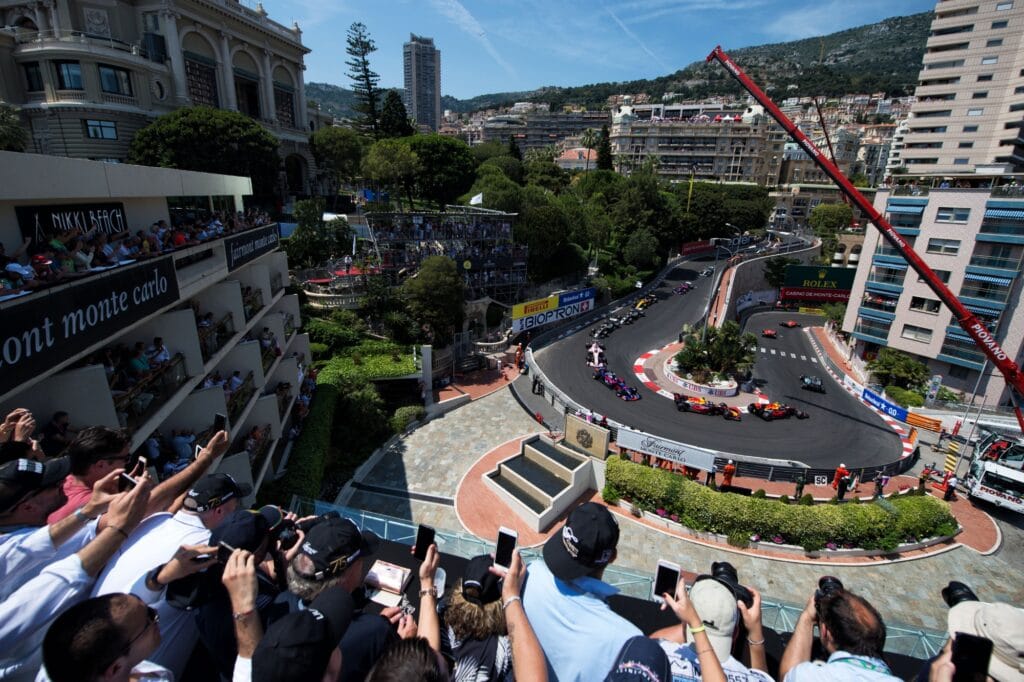
The Fairmont Hairpin is the slowest corner in F1. From there, the cars accelerate into a tunnel and out the other side towards the chicane by the harbour. Nelson Piquet once compared racing here to “riding a bike around your living room.” The line still fits.
Fairmont Hairpin
Qualifying is the session that matters most. Overtaking is close to impossible, so pole position usually decides the winner. Sergio Pérez, who won in 2022, put it simply: “The pressure to deliver comes on Saturday in Monaco because overtaking is nearly impossible on Sunday.”
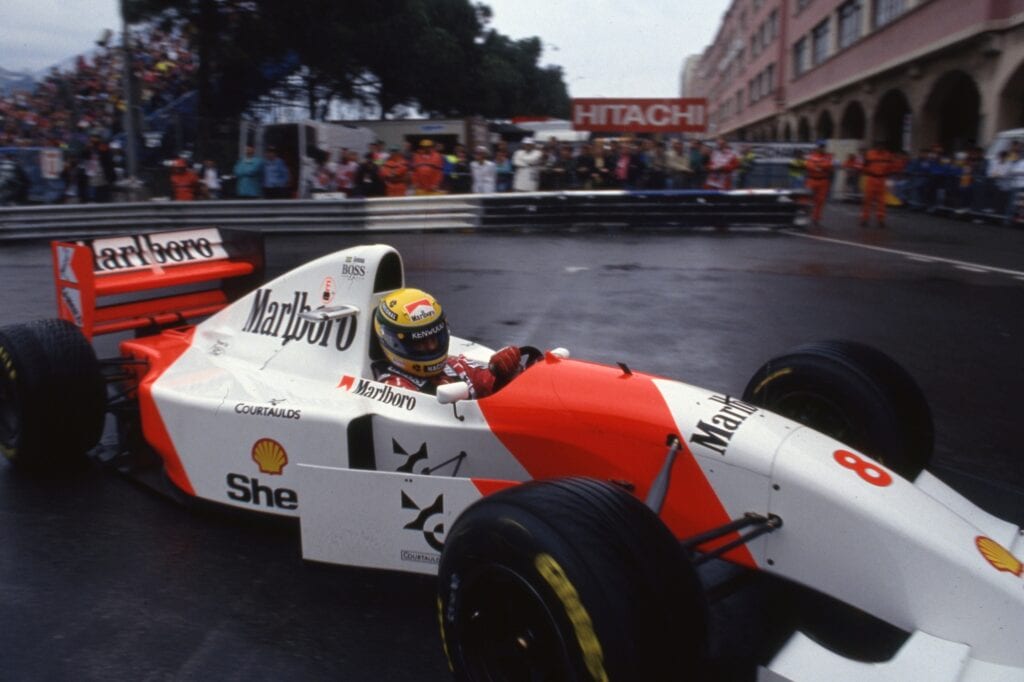
The race has history behind it. Ayrton Senna’s qualifying laps are still studied today. Daniel Ricciardo, Jenson Button, and Charles Leclerc have all won here in recent years. Each race adds another chapter.
Ayrton Senna in the McLaren MP4/8, on the streets of Monaco in 1993
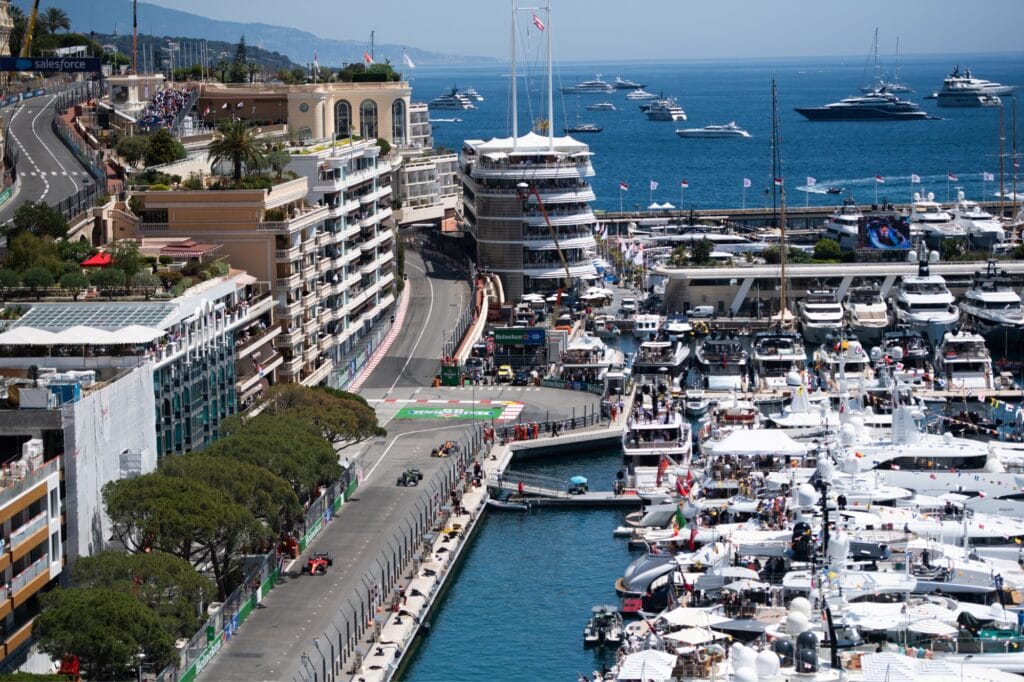
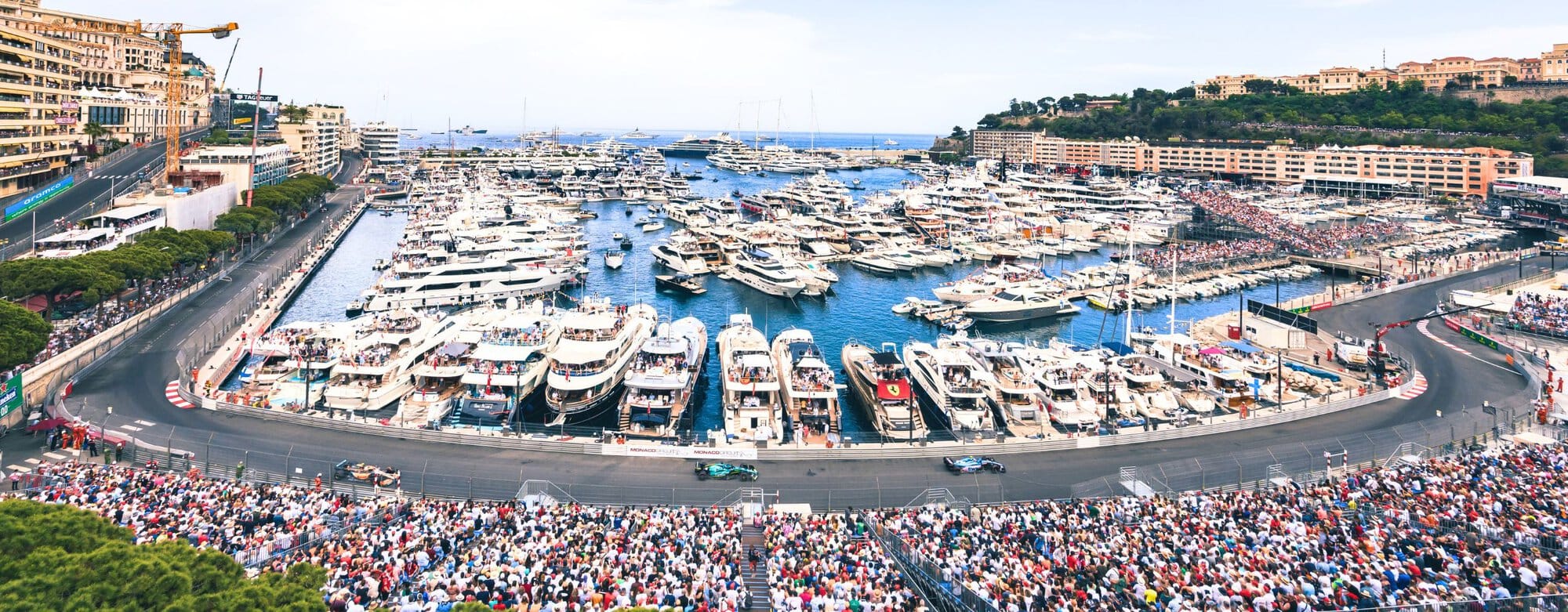
The principality fills up during race week. Yachts crowd the harbour. The bars and terraces around the Rascasse corner buzz from Thursday onwards. The atmosphere is a big part of what makes attending different from watching at home.
Glamour and racing in Monaco
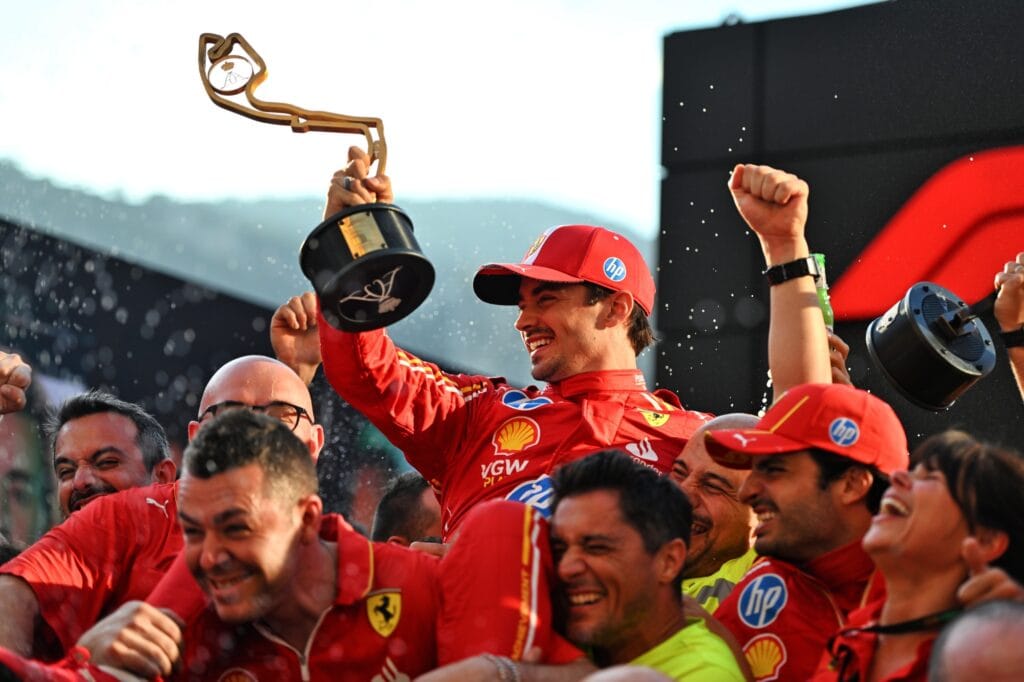
For drivers, Monaco is personal. Charles Leclerc grew up here, and he has called racing on his hometown streets “something very special.”
Charles Leclerc wins at his home race in Monaco
For all the glamour, it’s still one of the toughest races on the calendar. Narrow streets, sharp elevation changes, and no margin for error make it a real test. It’s the win drivers most want on their record.
Whether you watch from a grandstand or a balcony above the harbour, Monaco is a weekend that stays with you.
Where’s the circuit?
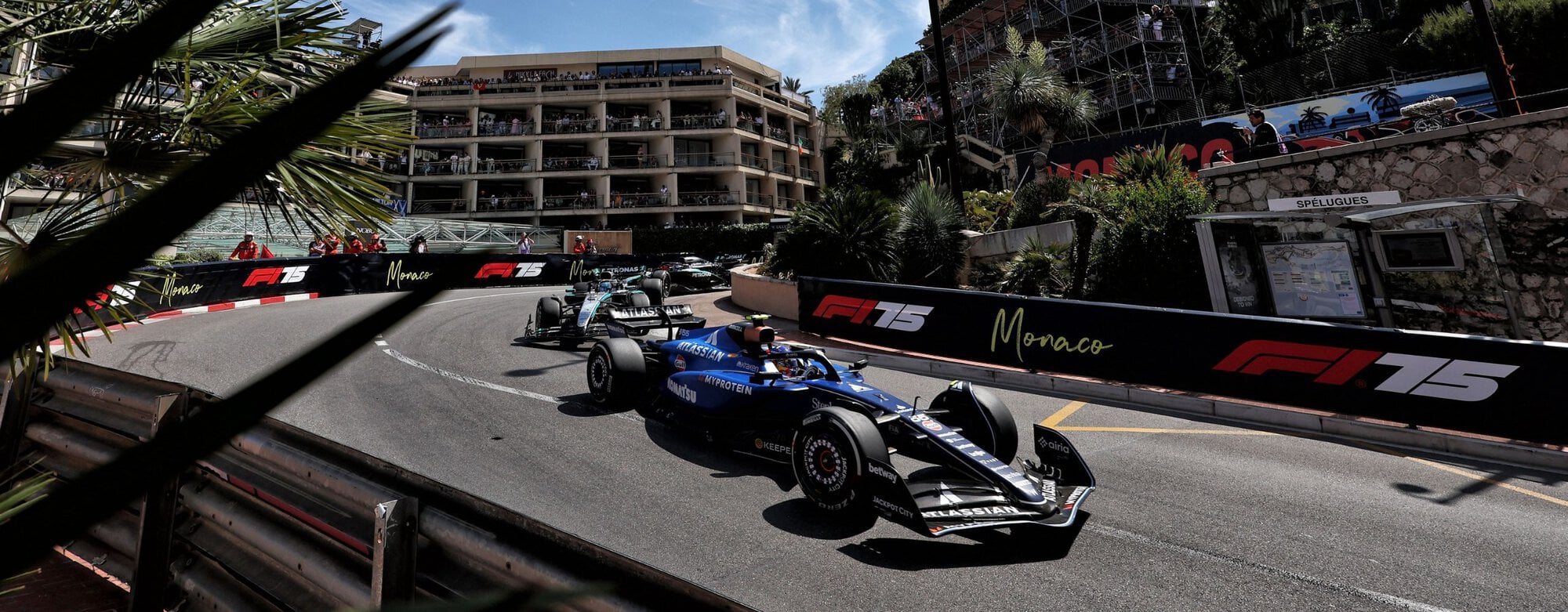
The Monaco Grand Prix takes place on the Circuit de Monaco, a street circuit that winds through the heart of Monte Carlo in the Principality of Monaco. The track runs along city streets, passing the harbour and iconic landmarks such as Casino Square and the Fairmont Hairpin.
Monaco doesn’t have its own airport. Most fans fly into Nice Côte d’Azur Airport (NCE), about 7 km west of central Nice and roughly 40 minutes by road from Monaco. Direct flights to Nice run from most European hubs and a good number of regional airports.
Most fans stay in Nice rather than Monaco itself. The train between the two takes around 25 minutes and runs directly on race days.
Many nationalities don’t need a visa to enter France or Monaco, but check the official guidance for your passport before booking. For visa-exempt travellers, ETIAS travel authorisation is now required when visiting France, Monaco, and other European destinations. It’s an online application, not a visa, and it’s worth sorting well ahead of the trip.
How many days should you spend at the Monaco Grand Prix?
Plan for three full days, Friday to Sunday. That gives you every F1 session plus the support races: Formula 2, Formula 3, and the Porsche Supercup. Between sessions, there’s almost always something on track.
Monaco Grand Prix weekend schedule at a glance
A typical Monaco Grand Prix runs like this:
Thursday: A quiet start. Practice sessions for the support series only.
Friday: Formula 3 and Formula 2 sprint races, F1 practice, and qualifying for the support series.
Saturday: More support racing in the morning, the final F1 practice session, and F1 qualifying to close the day. This is the session most fans circle.
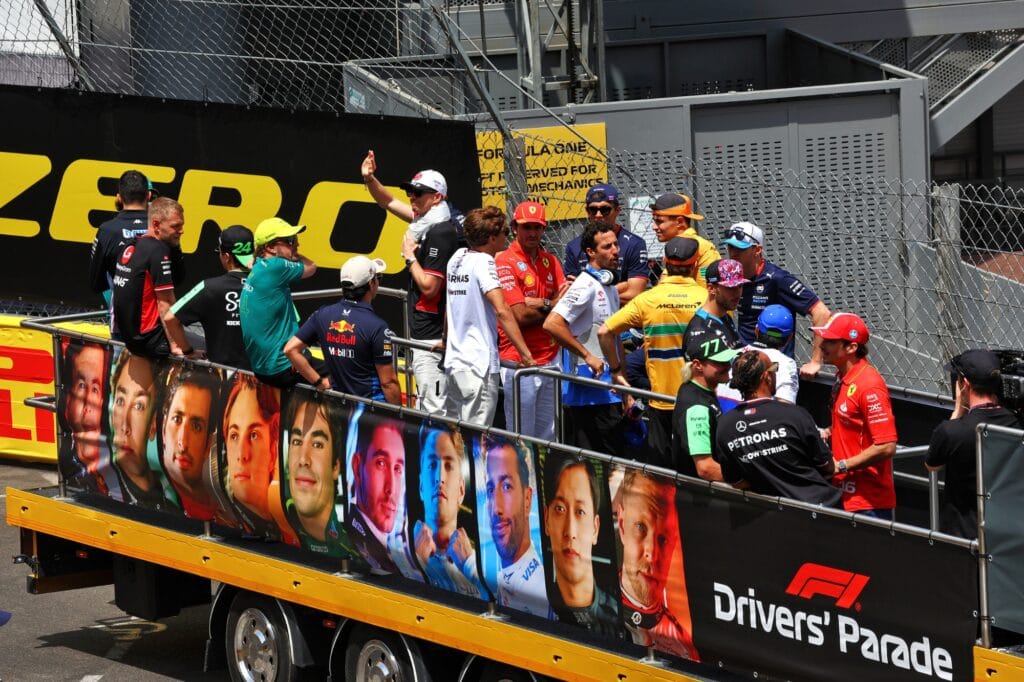
Sunday: Support race finals, the drivers’ parade, and the Monaco Grand Prix itself.
A handful of races each season use a sprint format, which shuffles the running order. On a sprint weekend, Friday has practice and sprint qualifying, Saturday has the sprint race and Grand Prix qualifying, and Sunday is still the Grand Prix. Sprint weekends rotate each year, so check the current schedule on F1.com.
Drivers’ parade
Best places to stay for the Monaco Grand Prix
For most visitors, the choice comes down to Nice or Monaco. The deciding factor is usually price.
Monaco has a small number of hotels and prices are high. A four-night stay over race weekend often runs into the thousands of pounds.
Nice is a 20-minute direct train ride from Monaco and has the closest international airport. It also has a wide selection of bars, restaurants, and hotels at every level. For most fans, Nice is the more practical base.
Hotels in Nice
If you’re staying in Nice, look at hotels on or near Avenue Jean Médecin, the main street running from Nice Station down to the Promenade des Anglais. Side streets off Jean Médecin will usually put you 20 to 30 minutes’ walk from the station.
The Promenade des Anglais also has hotels, some with sea views and private beaches.
Staying in Monaco has its advantages. You’re at the circuit, you don’t have to commute on race days, and you’re in the heart of the action.
There are some things worth thinking about before booking, though. Monaco is a street circuit, so roads are closed from early morning until racing ends each day. Even a short journey to your vantage point can involve long detours on foot.
Best Grandstands for Key Moments at the Monaco Grand Prix
There is no bad grandstand at Monaco. The circuit is short, and the action is concentrated. You’ll see the cars often, wherever you sit.
The four key viewing areas are Sainte-Devote at Turn 1, Casino Square, the harbour section (covering Tabac, the swimming pool section, and Rascasse), and Anthony Nogues at the final corner.
Grandstand T, opposite the pit lane, is Monaco’s version of a main grandstand. The higher rows are the only covered seats on the circuit.
About General Admission: Monaco’s general admission area is called Le Rocher, a rocky hillside above the circuit. It’s not a grandstand. There are no seats. For most fans, a named grandstand is the better choice.
Cannes Cannes is around 45 minutes west of Nice along the coast. It’s best known for its film festival in May and for the Croisette, the seafront promenade lined with hotels, restaurants, and boutiques. The old town, Le Suquet, sits up on a hill above the harbour and gives you good views over the bay.
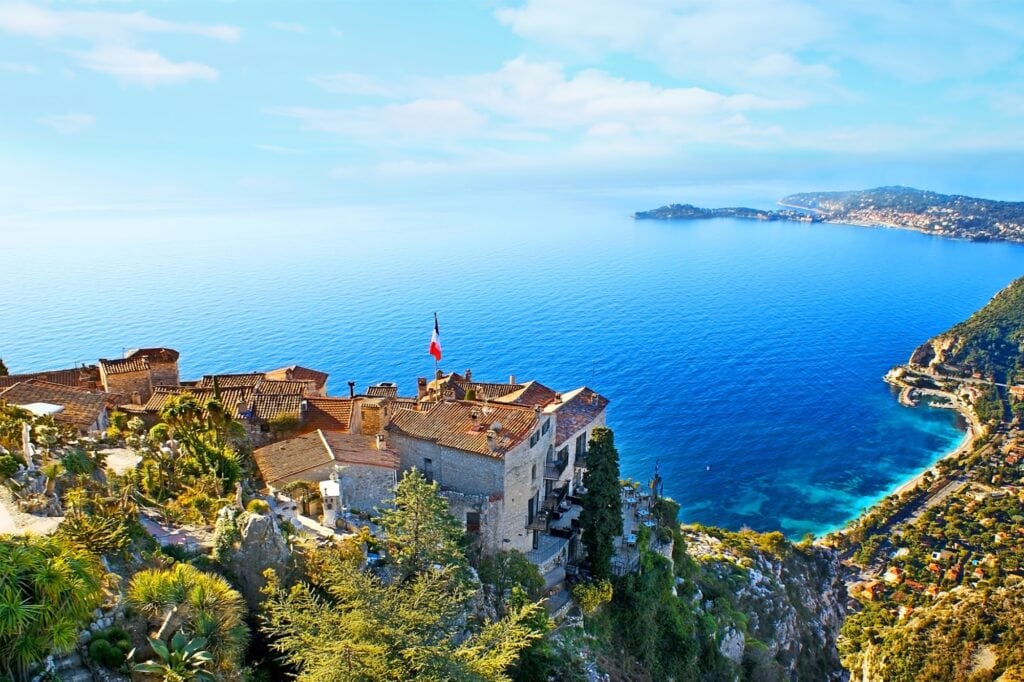
The French Riviera Èze is a medieval village set into the cliffs above the coast, around 15 minutes from Monaco. The narrow streets and the views over the Mediterranean make it worth a half-day. Further along the coast, Antibes and Saint-Paul-de-Vence are also worth considering, and the beaches at Nice are easy to reach for an afternoon by the sea.
Èze
Best booking resources for F1 trips
Planning the trip is the fun part for some and a chore for others.
If you would rather not handle all the details yourself, we can do that for you. Take a look at our Grand Prix ticket & travel packages »
Prefer to do it all yourself? You’re welcome to take everything you’ve learned here and book your own trip. These are good places to start. They’re reliable, easy to use, and usually the best value.
Tickets
Grand Prix Tickets is the agency I’ve trusted for years. They’ve always been reliable, easy to deal with, and quick to help if something comes up.
Hotels
ZenHotels is one of my go-to sites for hotel bookings. It pulls prices from many smaller sites you might not know about, which makes it good for finding deals. I also check Expedia and Booking.com when I want more options.
Excursions
Viator is full of walking tours, attraction tickets, and local experiences. It’s especially handy if you’re heading to a new Grand Prix city. It’s a good place to find extras to add to your trip.
FAQ's
It runs through the streets of Monte Carlo and along the harbour, in the Principality of Monaco.
Fly into Nice Côte d'Azur Airport in France, then take the train. Services run up to three times an hour and take no more than 25 minutes.
Three full days, Friday to Sunday, covers every Formula 1 session and the support races.
Nice. It has the closest international airport, a much wider range of hotels and prices, and a direct 20-minute train to Monaco.
Money-saving tips for the Monaco Grand Prix
Stay in Nice rather than Monaco Monaco hotels can run into the tens of thousands of pounds for a few nights over race weekend. Nice has a much wider range of hotels at every level, and the train commute to the circuit is fast.
Take the train The train is the cheapest way to reach the circuit and gets you into the heart of the action.
Consider an indirect flight Direct flights to Nice are convenient, but a one-stop routing through another European hub can sometimes be significantly cheaper, especially over race weekend.
Rob is an experienced independent travel consultant and travel content creator.
His love for Formula One started in the 1990s, watching the greats like Ayrton Senna, Michael Schumacher, and Mika Hakkinen. He traveled to his first Grand Prix in 1999. It was the Spanish Grand Prix in Barcelona. Since then, Rob has traveled to over 2/3 of Grand Prix’ on the current Formula One calendar.
Fast forward to today, and Rob has turned his passion into a career, dedicating his time to helping others plan their dream Formula One trips.
His favourite Grand Prix destinations are Austria and Austin, and when he’s not attending a Formula One Grand Prix, you’ll find him closer to home, walking or cycling in the Peak District National Park.
Featured Articles
Find Your Next Grand Prix Adventure!
Excited about the next Formula One season? If you'd like to attend a Grand Prix, you're in for a treat. Discover where Formula 1 could take you.
5 Reasons Why the Singapore Grand Prix Should Be on Your F1 Bucket List
Few races capture the magic of Formula 1 quite like the Singapore Grand Prix. With its night-time setting, unbeatable city-center location, and thrilling street racing, here are five reasons why it’s an experience every F1 fan should have.
What’s it like to experience Formula 1 in the heart of motorsport’s most glamorous setting? We asked Marc Priestley, former McLaren race mechanic and pit lane insider, to share his take on the Monaco Grand Prix.
Choosing the right vantage point can change everything about a race weekend. Whether you want sweeping views, non-stop action, or a bit of both, these spots guarantee you won't miss a thing.
Choosing the right vantage point can change everything about a race weekend. Whether you want sweeping views, non-stop action, or a bit of both, these spots guarantee you won't miss a thing.
You've likely come across Champions Club when looking at Grand Prix tickets. But what do you actually get? This guide covers everything included, from the paddock tour to the grid walk, so you can decide if it's right for your race weekend.