Last updated October 2026
If you’re thinking about attending the US Grand Prix, Austin is well worth considering. There’s plenty of action on track, a fantastic atmosphere and a city with plenty of character. Here’s what makes Austin such a great place to experience Formula One in person.
What to Expect in This Guide
• Why the United States Grand Prix should be on your F1 bucket list
• Where is the circuit for the United States Grand Prix?
• How to get to Austin for the United States Grand Prix
• How many days do you need for the United States Grand Prix?
• United States Grand Prix weekend schedule
• Best places to stay for the United States Grand Prix
• Best grandstands at the Circuit of the Americas
• Where to go after the United States Grand Prix
• Best booking resources for F1 trips
• Money-saving tips for the United States Grand Prix
• Frequently asked questions
Estimated Reading Time: 7-9 minutes
Why the United States Grand Prix should be on your F1 bucket list
If you’re looking for a Grand Prix with plenty of racing action and a great atmosphere away from the circuit, Austin is hard to beat.
The Circuit of the Americas (COTA) is one of those tracks that has a bit of everything. There’s the steep uphill climb into Turn 1, known as “Big Red”, long straights, fast corners and plenty of opportunities for overtaking.
With 20 turns, nearly 40 metres of elevation change and an anti-clockwise layout, it’s also one of the more physically demanding circuits on the Formula One calendar.
As Franco Colapinto puts it, “The Circuit of the Americas is an incredible track to drive.” Lando Norris agrees, “I really enjoy driving around COTA. It’s fast with some good opportunities to overtake.”
What makes COTA particularly good for spectators is the variety of racing. Drivers can battle side by side through the corners, while the long back straight creates opportunities for late braking and overtaking into Turn 12. There’s plenty happening around the lap, which makes it a great place to watch Formula One in person.
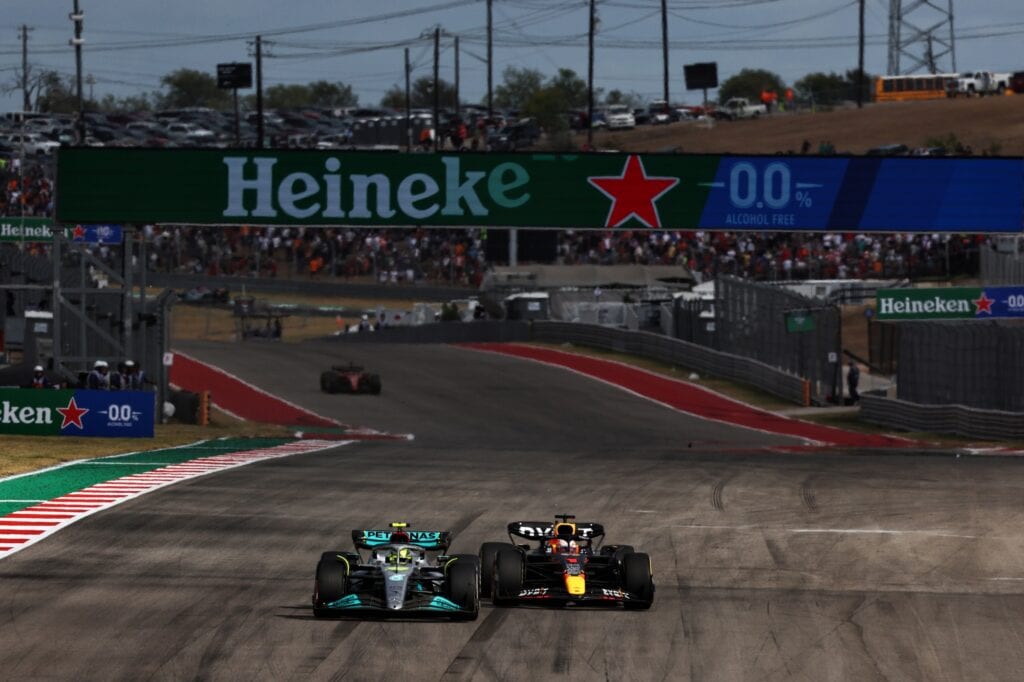
Just look at the racing history at COTA. In its first ten years, the winning margin exceeded 10 seconds only once, which tells you how close the racing can be.
In 2021, Max Verstappen held off Lewis Hamilton to win by just 1.3 seconds. A year later, Fernando Alonso went airborne after a high-speed collision but still recovered to finish seventh. And who could forget Kimi Räikkönen’s victory for Ferrari in 2018?
It’s these kinds of moments that make the US Grand Prix such an enjoyable race to watch, especially when you’re there to experience it in person.
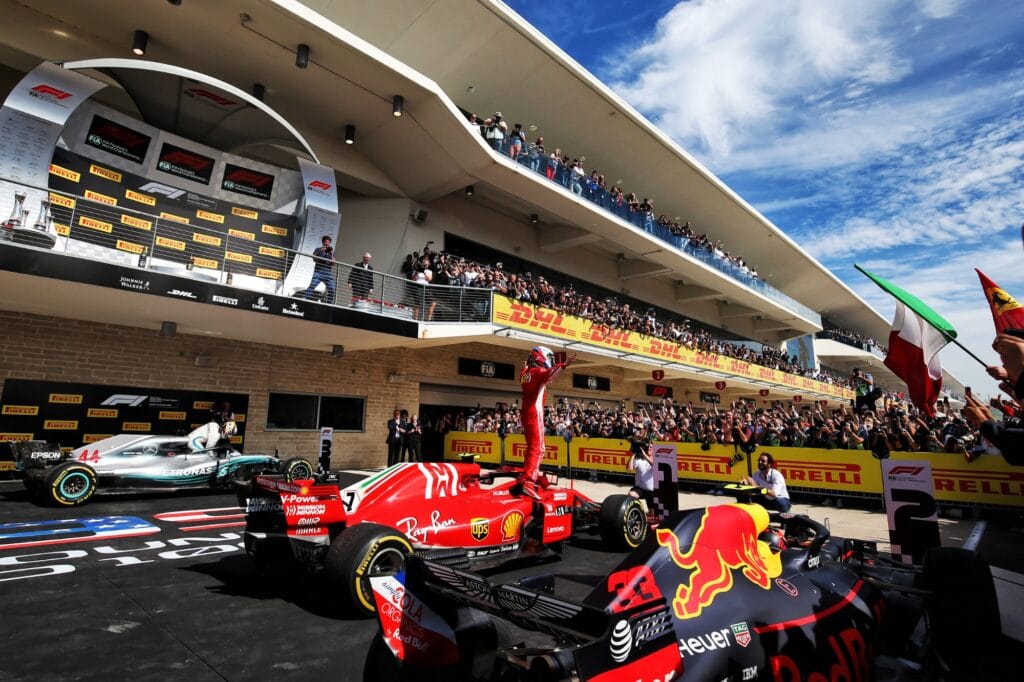
The atmosphere is another big part of what makes the US Grand Prix special. Austin is a favourite among many drivers, and the crowds bring plenty of energy to the weekend.
Alex Albon has described it as “one of the best tracks of the year in terms of atmosphere and the fans”, while Oliver Bearman says, “It’s so nice to soak in the atmosphere and passion from all the American fans.”
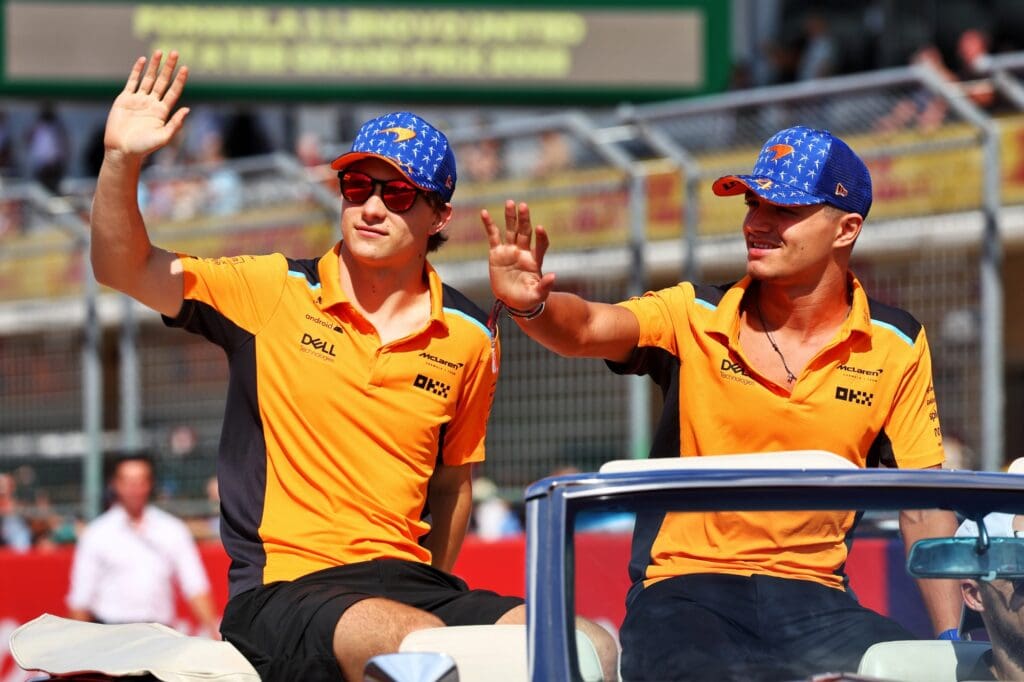
And then there’s Austin itself. Texas barbecue, live music and a city that really gets behind the Grand Prix. The teams and drivers embrace the local traditions too. You’ll see McLaren drivers in papaya-coloured American football jerseys, cowboy hats and even full Western outfits. Stetsons have also become a familiar sight on the podium, replacing the usual caps.
It’s this mix of Formula One and Texas culture that gives the US Grand Prix its character. You’re not just visiting a circuit for the weekend, you’re getting to experience a little of Austin too.
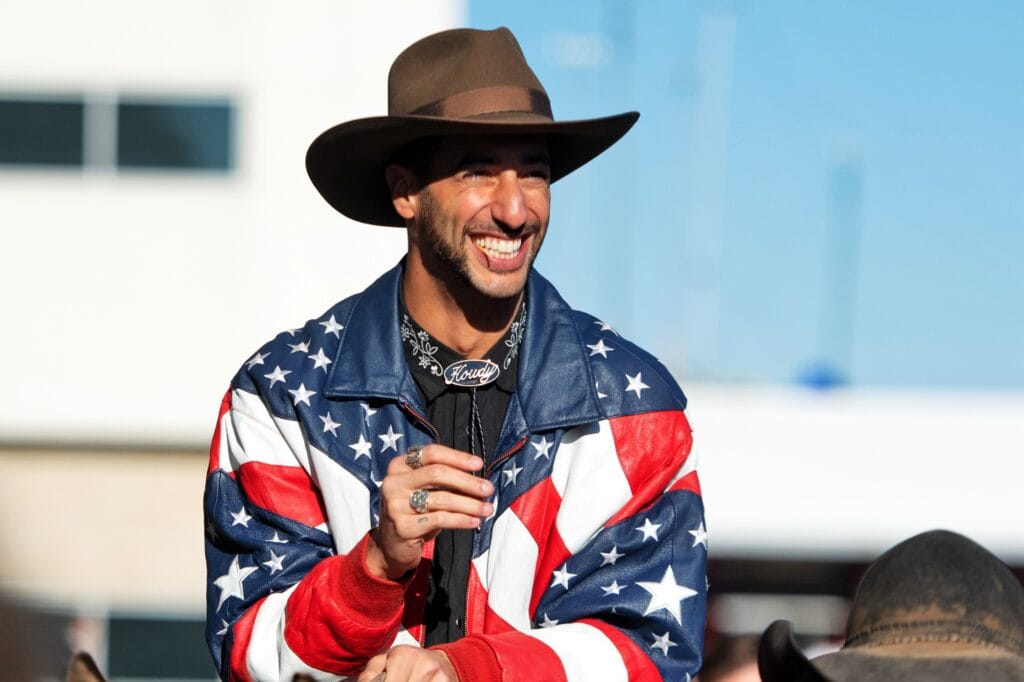
The US Grand Prix in Austin is about more than just the racing. It’s a chance to enjoy Formula One alongside Texas hospitality, live music and a relaxed, welcoming atmosphere
COTA has given us close finishes, championship battles and plenty of memorable moments over the years. Combine that racing history with Austin’s character and enthusiastic crowds, and it’s easy to understand why the US Grand Prix has become such a favourite on the Formula One calendar.
Where is the circuit for the United States Grand Prix?
The Circuit of the Americas (COTA) is around 18 miles southeast of downtown Austin. It’s a large, purpose-built Formula One circuit with 20 turns, an anti-clockwise layout and plenty of elevation changes, including the steep uphill climb into Turn 1.
Most fans stay in Austin and travel to the circuit each day. Downtown is a particularly good base, with plenty of hotels, restaurants and live music venues, all within a relatively compact, walkable area. It’s also a great place to spend time away from the circuit during the Grand Prix weekend.
Read the full guide to visiting Circuit of the Americas here
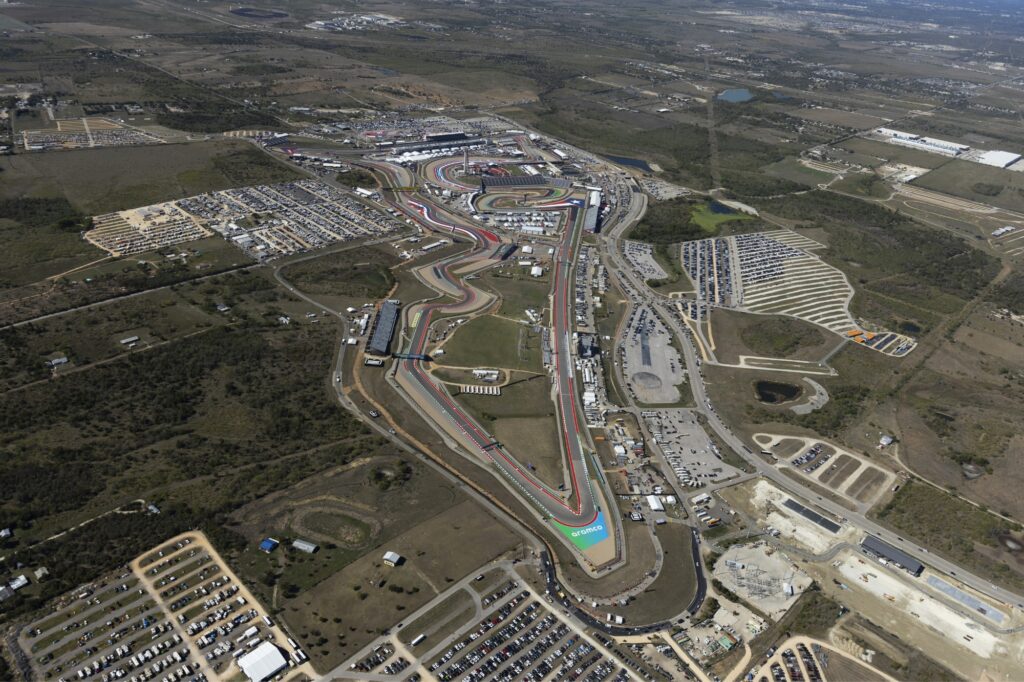
How to get to Austin for the United States Grand Prix
Getting to Austin is straightforward. There are direct flights from some European cities, or you can connect through another US airport. If you’re travelling from Australia or New Zealand, you’ll generally connect through a major hub such as Los Angeles or Dallas, where you’ll clear US immigration before continuing to Austin.
For travellers within the United States, Austin has regular flights from major cities across the country. You could also fly into Houston or Dallas and continue to Austin by road or air.
Austin-Bergstrom International Airport is around 8 miles from downtown. Taxis, Uber, Lyft and public buses are available for the journey into the city centre. You can also hire a car, although you probably won’t need one if you’re staying downtown and using the Grand Prix shuttle buses to get to the circuit.
Read the full guide to getting to Austin for the United States Grand Prix here
How many days do you need for the United States Grand Prix?
I’d recommend spending all three days at the circuit, from Friday to Sunday. That way, you won’t miss any of the Formula One sessions or the support races.
Previous years have featured Porsche Carrera Cup North America and Masters Historic Racing. I’d recommend arriving in good time each day to enjoy everything happening at the circuit throughout the Grand Prix weekend.
United States Grand Prix weekend schedule
Here’s a quick breakdown of what you can expect each day at the United States Grand Prix.
Friday
The weekend gets underway with practice sessions for support series such as Masters Historic, followed by the first Formula One practice session around midday. Porsche Carrera Cup North America may also take to the track during the afternoon, before Formula One returns for its second practice session.
Saturday
The morning typically begins with qualifying and racing from the support series, including Porsche Carrera Cup North America and Masters Historic. Formula One’s third and final practice session takes place around midday, followed by more support racing. Later in the afternoon, Formula One qualifying sets the starting grid for Sunday’s Grand Prix.
Sunday
Race day usually begins with support races, such as Masters Historic and Porsche Carrera Cup North America, in the morning. The Formula One drivers’ parade takes place in the early afternoon, before the United States Grand Prix gets underway later in the day.
The exact timetable and support race programme can change from year to year, so check the official schedule before your trip.
Best places to stay for the United States Grand Prix
Downtown Austin is the natural base for the United States Grand Prix. The city centre puts you within walking distance of the live music venues on 6th Street, the bars and restaurants on Congress Avenue, and the main shuttle bus pickup point for the circuit. South Congress (SoCo), the trendy strip just south of the river, is another popular alternative.
Luxury hotels
• The LINE Austin »
• JW Marriott Austin »
• Fairmont Austin »
• W Austin »
• Austin Proper Hotel »
• Thompson Austin »
• The Driskill »
Mid-range hotels
• Kimpton Austin »
• Canopy by Hilton Austin Downtown »
• Hyatt Centric Congress Avenue »
• Tommie Austin, part of JdV by Hyatt »
• Hilton Austin »
• Embassy Suites by Hilton Austin Downtown South Congress »
• Hyatt Place Austin Downtown »
• Hyatt House Austin Downtown »
• Holiday Inn Express Downtown University »
• Hotel Indigo Austin Downtown »
South Congress
• South Congress Hotel »
• Hotel San José »
Camping at COTA
The circuit also has on-site campgrounds and RV parks for fans who want to stay close to the action.
Best grandstands at the Circuit of the Americas
The Circuit of the Americas is one of the few anti-clockwise tracks on the Formula One calendar. Although it’s a modern circuit, its layout takes inspiration from some of the sport’s most famous corners, including Hockenheim’s stadium section, Istanbul’s multi-apex Turn 8 and the fast Maggots and Becketts complex at Silverstone.

Austin’s most distinctive feature is Turn 1. From the start line, drivers climb steeply uphill towards a tight, almost blind hairpin. The wide entry gives them several possible racing lines, making it one of the best places to watch overtaking, particularly on the opening lap and after restarts.
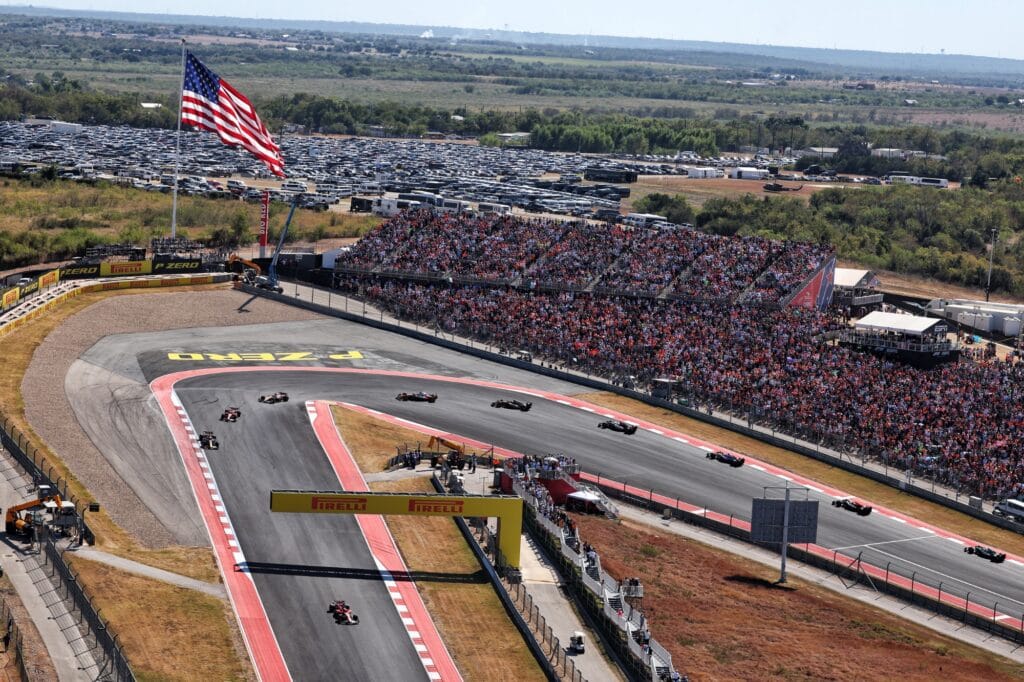
Turn 12 is another good overtaking spot, where drivers brake hard at the end of the long back straight.
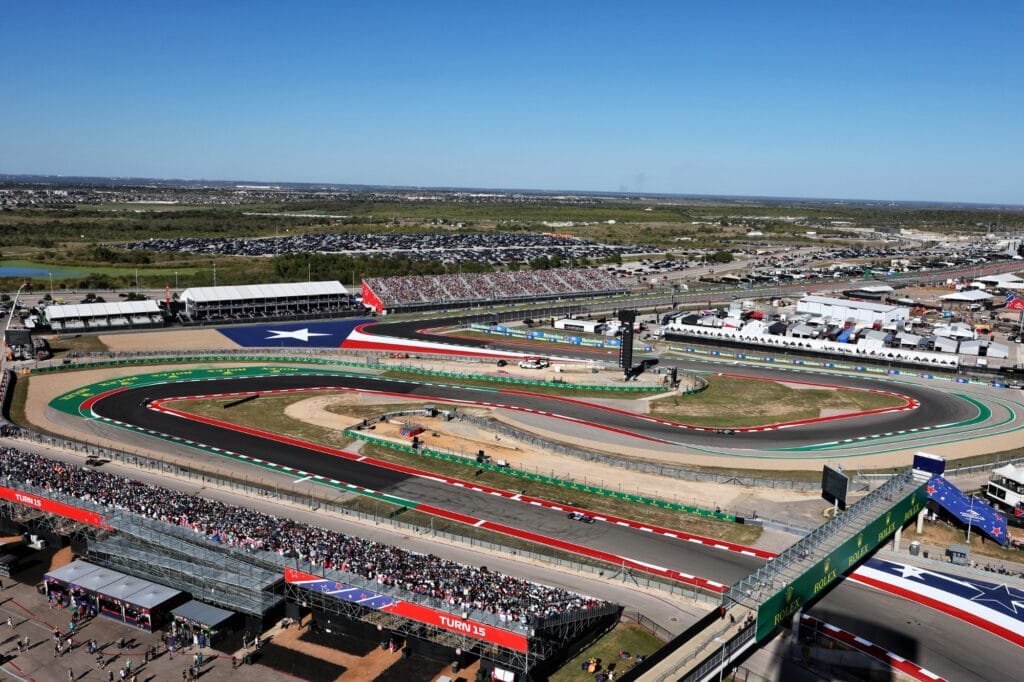
Most grandstands are uncovered so bring sun protection or rain gear just in case.
Read the full guide to choosing your grandstand for the United States Grand Prix here
Where to go after the United States Grand Prix
If you’re planning to stay a little longer after the United States Grand Prix, Austin is a good starting point for exploring more of Texas and beyond.
Just west of the city, the Texas Hill Country is known for its scenic drives, wineries and small towns, including Fredericksburg and Wimberley. San Antonio is around 90 minutes south, where you can visit the Alamo and explore the famous River Walk.
For a longer trip, you could head to Memphis, Nashville or New Orleans. Each has its own distinctive music scene, along with plenty of good food and places to explore.
Another option is to combine two Grand Prix weekends in one trip. The Mexican Grand Prix often takes place the weekend after Austin, giving you the chance to continue south to Mexico City and enjoy a second Formula One race before heading home.