Last updated February 2026
The Chinese Grand Prix provides an early-season test of performance, precision, and strategy. Here’s what to expect from the circuit, the race weekend, and the key choices that help you plan your trip.
What to expect in this guide
• Why the Chinese Grand Prix should be on your F1 bucket list
• Where’s is Shanghai Circuit
• Travelling to Shanghai: What you need to know
• How many days should you spend at the Chinese Grand Prix?
• Chinese Grand Prix weekend schedule at a glance
• Best places to stay for the Chinese Grand Prix
• Best Grandstands for key moments at the Chinese Grand Prix
• Where to go next after your trip to the Chinese Grand Prix
• Frequently Asked Questions
• Money-saving tips for the Chinese Grand Prix
Estimated Reading Time: 8 minutes
Why the Chinese Grand Prix should be on your F1 bucket list
China joined the Formula 1 calendar in 2004, debuting alongside Bahrain. Since then, it has hosted several memorable moments, including the 2005 season finale, a championship-altering race in 2007, and a thrilling display of overtaking in 2018.
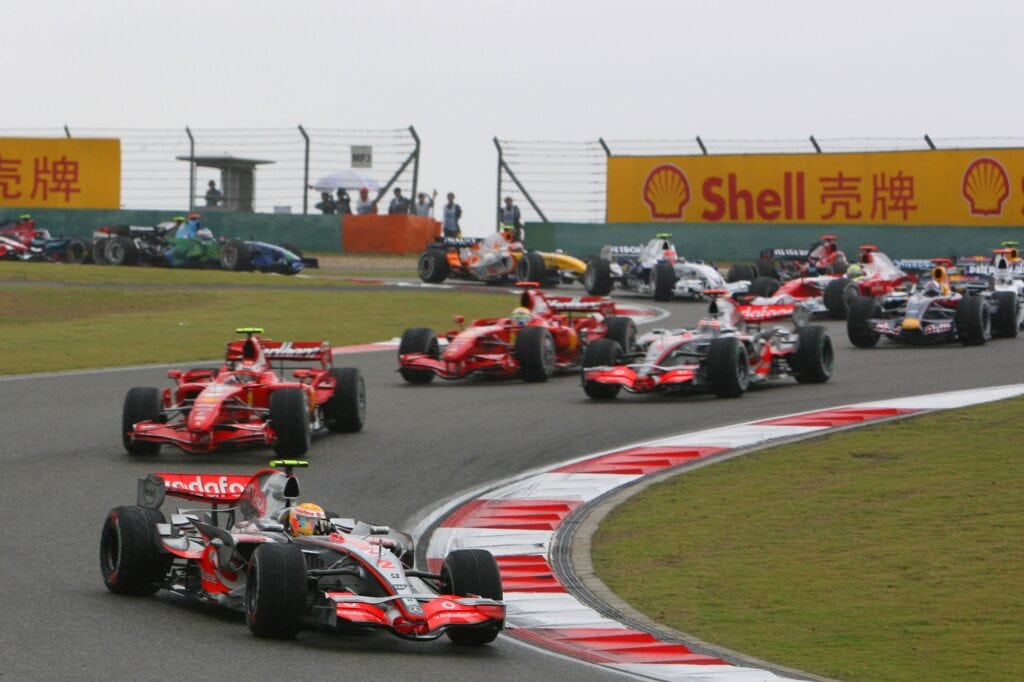
Positioned early in the calendar as part of the flyaway sequence, the Shanghai weekend is a key reference point after the opening rounds. Teams arrive knowing this circuit can expose both strengths and weaknesses. As the championship begins to take shape early in the season, Shanghai acts as an important checkpoint. It tests execution, adaptability, and technical clarity.
The circuit’s design was inspired by the Chinese character Shang, meaning “above” or “ascend.” The layout blends long straights with tight, low-speed corners. As Nico Hülkenberg puts it, “the layout of the track is quite funky,” presenting drivers with a challenge they don’t face elsewhere. Sergio Pérez says “Shanghai is a track I have always enjoyed. The layout is interesting and the long back straight makes racing there exciting.”

The 5.451km permanent circuit also includes one of the most distinctive opening sequences in Formula One. Turn 1 tightens through a long-radius spiral before feeding into Turn 2, placing heavy demands on front-end grip and tyre temperature management.
For drivers, the lap has a clear rhythm. The opening sector rewards patience and precision, while the straight rewards strong exits and efficient energy use.
Weather often plays a role in Shanghai. Cooler conditions can affect tyre warm-up, while gusting winds across the open infield can unsettle car balance. Track conditions evolve through the weekend, and the long straight offers clear strategic opportunities.
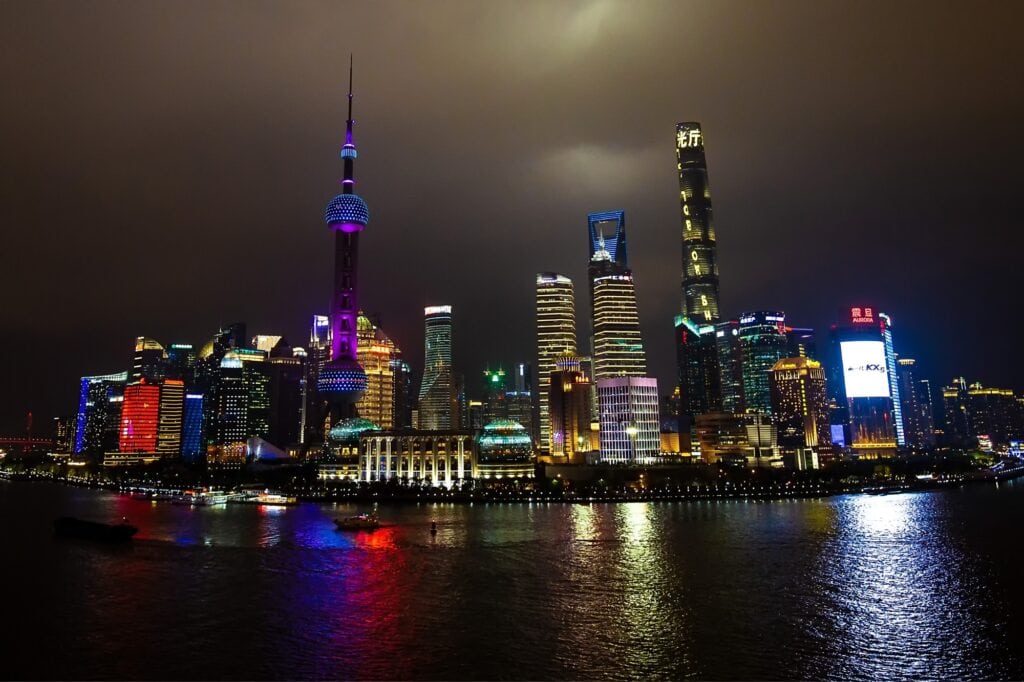
Beyond the track, Shanghai is one of the world’s most dynamic cities. It offers a mix of modern development and deep cultural history, making it a distinctive and rewarding destination for a Grand Prix trip.
Shanghai combines modern infrastructure with a passionate and increasingly knowledgeable fan base. Drivers often point to the atmosphere here, with Lewis Hamilton saying “China has always been a special place to race and the fans there are incredible.”
Where is the circuit for the Chinese Grand Prix?
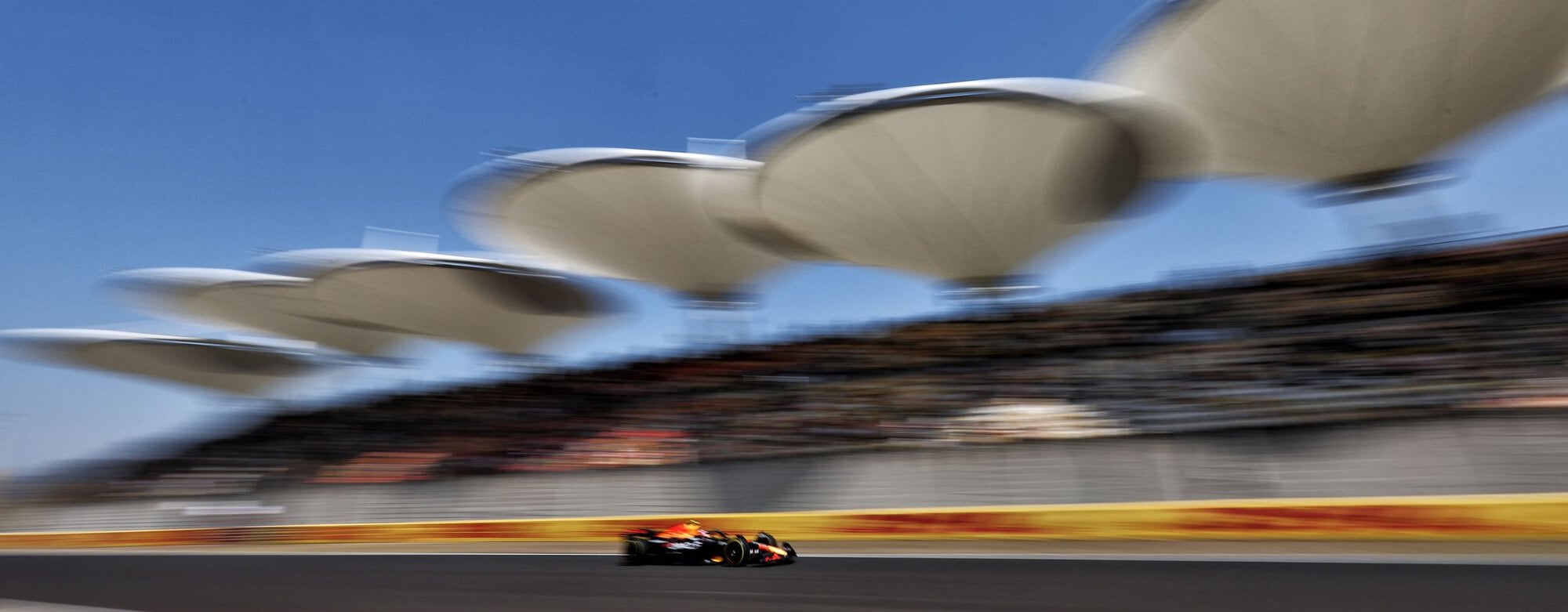
The Shanghai International Circuit is in the Jiading District, around 35km from downtown Shanghai. The venue sits on reclaimed marshland and was purpose-built for Formula One, with large run-off areas and expansive grandstand complexes.
Its location on the outskirts of one of the world’s largest metropolitan areas allows easy transport access while accommodating the scale of a modern F1 facility.
The easiest way to get there is by Metro, with a dedicated station on Line 11. The journey from central Shanghai takes about 60 minutes.
The Line 11 station is designed for race access, but you should still expect a walk from the station to your grandstand. On race weekend, clear signs and staff guide fans from the station to the circuit entrances. The closest entrance is Gate 1, behind the main grandstand. Leaving after the race can take time, as many fans use the Metro at once.
How to get to Shanghai for the Chinese Grand Prix
Shanghai is served by Shanghai Pudong International Airport (PVG) and Shanghai Hongqiao International Airport (SHA), with direct flights from major cities worldwide.
Typical non-stop flight times are about 11–12 hours from Europe, 14–16 hours from the United States, 9–10 hours from Australia, and 8–9 hours from the Middle East.
Getting into central Shanghai is straightforward. From Pudong Airport, the journey takes about 45–60 minutes by taxi or by a combination of the Maglev train and Metro. Hongqiao Airport is closer and well connected by Metro and taxi. Having your hotel address in Chinese characters can help when using taxis.
Most international visitors will need a visa to enter China, so it is best to apply well in advance, as processing times can vary.
Arriving a few days before the Grand Prix weekend gives you time to explore the city and adjust to the time zone.
How many days do you need for the Chinese Grand Prix at the Shanghai International Circuit?
Plan for three full days, from Friday to Sunday. The Chinese Grand Prix follows the standard Formula 1 weekend, with each day building toward the race.
Arriving for all three days means you will see every Formula 1 session and the full support programme.
Alongside Formula 1, the weekend includes GT World Challenge Asia, F1 Academy, and Porsche Carrera Cup Asia. There is track action throughout each day, so staying through Sunday means you see the full weekend, from the first practice laps to the Grand Prix.
Chinese Grand Prix weekend schedule: what happens each day?
Here’s a simple breakdown of what happens each day at the Chinese Grand Prix.
Friday brings the first Formula 1 running of the weekend, with a practice session followed by Sprint qualifying. The support series also begin, with practice and qualifying for GT World Challenge Asia, F1 Academy, and Porsche Carrera Cup Asia. The circuit is active throughout the day.
Saturday starts with GT World Challenge Asia qualifying. Formula 1 then runs the Sprint race, followed by support races across the afternoon. Formula 1 Qualifying takes place later in the day and sets the grid for Sunday.
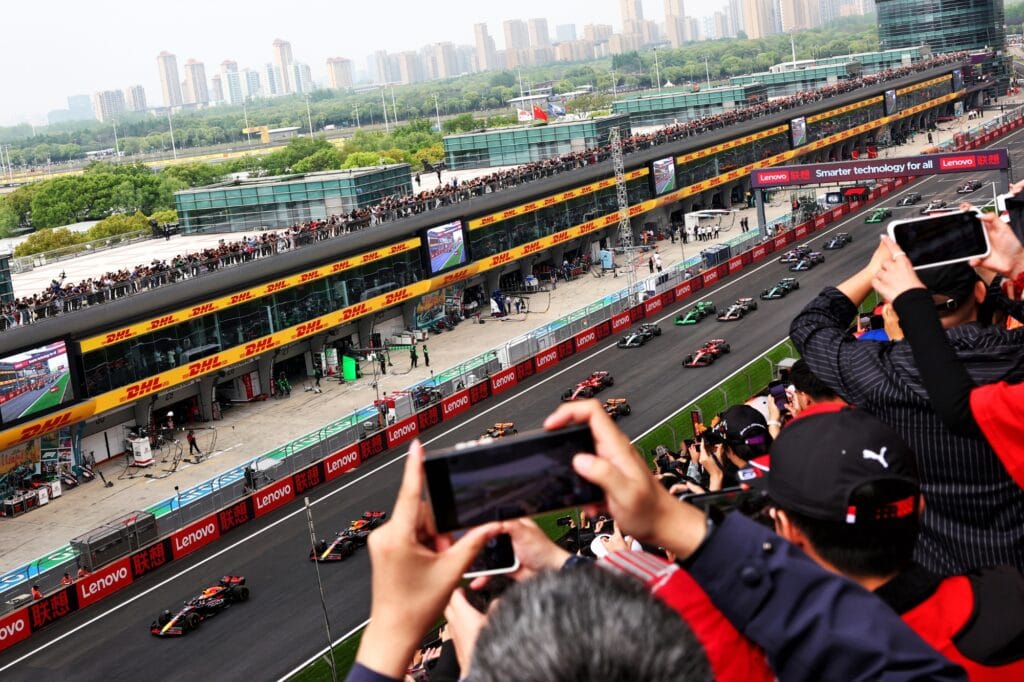
Sunday begins with support series races in the morning. The Formula 1 drivers’ parade follows, before the Chinese Grand Prix takes place in the afternoon.
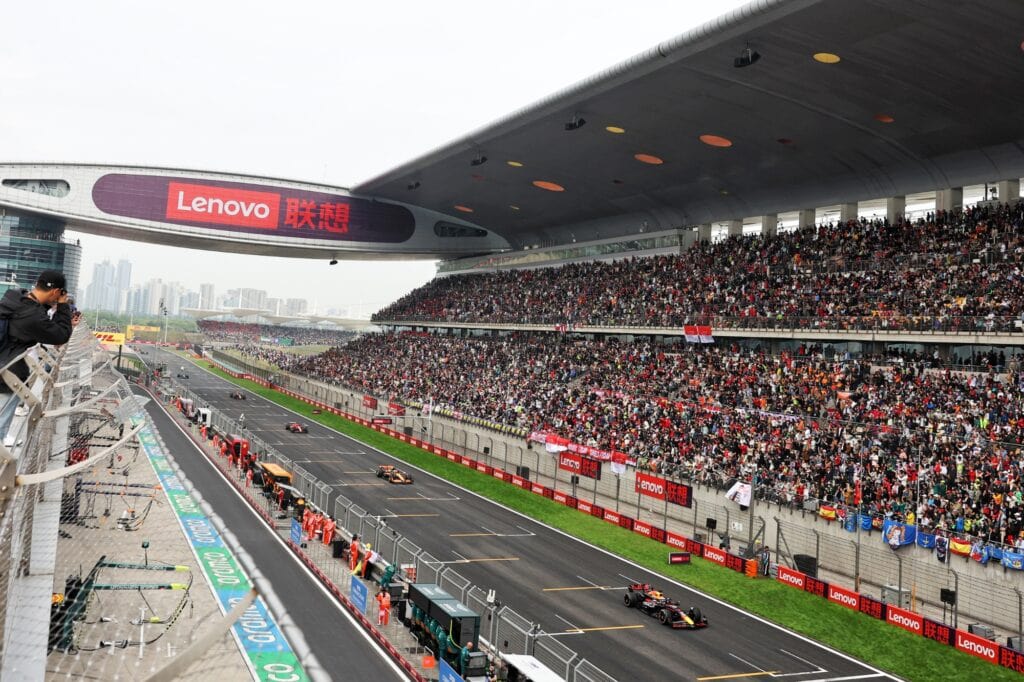
Best places to stay for the Chinese Grand Prix in Shanghai
Most travelling fans stay in central Shanghai, especially in the Pudong district. You have plenty of hotels, restaurants, and things to do within easy reach. From this part of the city, you can get to the circuit using Metro Line 2 and Line 11. Choosing a hotel with easy access to Line 11 makes the daily journey much simpler.
Where you stay comes down to a simple choice: a shorter trip to the circuit, or more time in the heart of the city.
Jiading District (closest to the circuit)
This option keeps your commute short and your mornings simple, especially on early race days. The area is quieter and less busy than central Shanghai, but there are fewer places to eat and limited nightlife. You will also be further from the main city attractions. This suits you if your focus is the racing and keeping travel time to a minimum.
The Bund & Pudong (central Shanghai)
This area places you close to restaurants, sights, and things to do in the evening. The journey to the track is longer, but you get the full Shanghai city experience around the race weekend.
Hotels in Pudong (about 1 hour by Metro with one change):
InterContinental Shanghai Pudong »
Mandarin Oriental Pudong »
Grand Hyatt Shanghai Pudong »
Holiday Inn Shanghai Pudong »
For a central location with direct Metro access (about 55 minutes, no change):
Radisson Collection Xing Guo »
The Longemont Shanghai »
If you prefer to stay closer to the circuit:
Sheraton Shanghai Jiading Hotel » about 35 minutes by Metro with one change
Cyts Greentree Eastern International Hotel » about 6 minutes by taxi
Crowne Plaza Anting » about 13 minutes by taxi
Courtyard by Marriott Jiading » about 8 minutes by taxi
These options give you a balance between staying in the city and reducing travel time to the circuit, depending on how you want to plan your weekend.
Best grandstands at the Shanghai International Circuit for the Chinese Grand Prix
The Shanghai International Circuit’s layout features two long straights that create perfect overtaking opportunities:
Grandstands H & K – These overlook the Turn 14–15 hairpin. They are one of the best places to watch overtaking, as drivers brake hard at the end of the long back straight. Many of the race’s passing moves happen here.
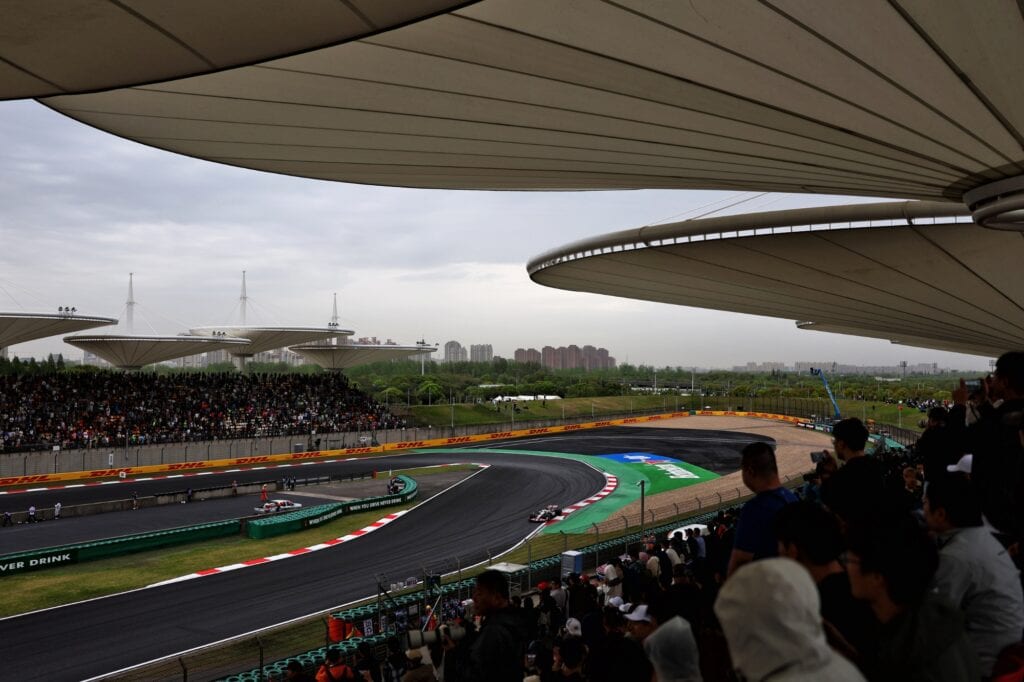
Grandstand A – Located on the start-finish straight opposite the pits. From here, you can see the race start, pit stops during the race, and the podium ceremony after the chequered flag.

Where to go after the Chinese Grand Prix
After the Chinese Grand Prix, take some time to explore Shanghai. The city offers a clear contrast between the modern skyline of Pudong and the historic waterfront along the Bund.
You can also visit the nearby water town of Zhujiajiao for a look at traditional canals and streets, or take a high-speed train to Suzhou to see its well-known classical gardens.
If you have more time, you may want to extend your trip to Beijing to visit the Great Wall and the Forbidden City.